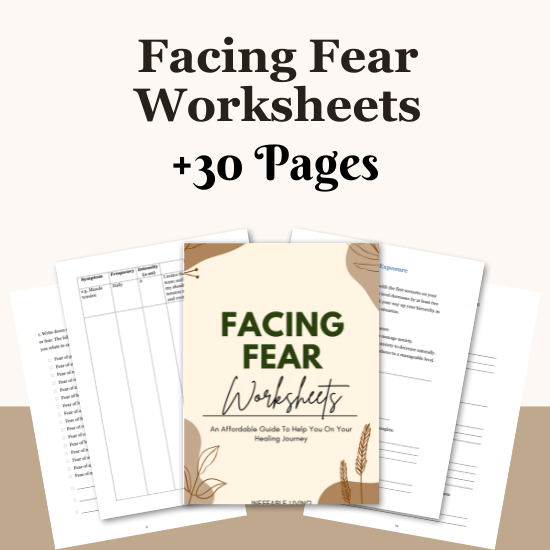
Facing fear becomes easier when you stop relying on motivation and decide in advance what you will do when fear appears.
A personal fear plan helps you identify your triggers, understand what you predict will happen, choose manageable steps, reduce avoidance, and decide how you will respond if the feared outcome actually occurs.
How to Build a Personal Plan for Facing Your Fears?
1. Choose One Fear to Work On
Do not start with every fear at once.
Choose one area such as:
- Speaking up.
- Driving.
- Social situations.
- Conflict.
- Rejection.
- Trying something new.
- Being alone.
A specific target makes progress easier to measure.
2. Describe the Situation Clearly
Instead of:
“I am afraid of people.”
write:
“I become afraid when I have to start conversations with people I do not know well.”
Be specific about when the fear appears.
3. Identify What You Actually Fear Will Happen
Complete:
“When I face this situation, I am afraid that ______.”
For example:
“I will say something awkward.”
“They will reject me.”
“I will lose control.”
The situation and the feared outcome are not the same thing.
4. Identify the Deeper Fear
Ask:
“If that happened, what would be so difficult about it?”
Maybe the deeper fear is:
- Shame.
- Rejection.
- Failure.
- Criticism.
- Helplessness.
- Losing control.
Understanding the deeper fear helps you target the real problem.
5. Identify What the Fear Would Mean About You
Complete:
“If this happened, I would believe it meant ______ about me.”
Maybe:
“I am incompetent.”
“I am unlikeable.”
“I cannot handle things.”
This belief may be making the situation feel more threatening.
6. Identify Your Common Triggers
Write down what tends to increase the fear.
Maybe:
- Being watched.
- Authority figures.
- Unfamiliar places.
- Conflict.
- Uncertainty.
- Being rushed.
Knowing your triggers helps you prepare.
7. Identify Your Early Warning Signs
Notice what happens before fear becomes intense.
Maybe you:
- Start overthinking.
- Want to cancel.
- Check repeatedly.
- Become unusually quiet.
- Feel an urge to escape.
Catch the pattern early.
8. Identify Your Avoidance Behaviors
Ask:
“What do I normally do when I feel this fear?”
Maybe you:
- Cancel.
- Delay.
- Ask someone else to do it.
- Stay silent.
- Leave.
- Avoid looking.
Write these down.
9. Identify Your Safety Behaviors
Sometimes you face the situation but rely heavily on behaviors that make you feel protected.
Maybe:
- Rehearsing excessively.
- Constantly checking.
- Seeking reassurance.
- Keeping someone beside you.
- Staying near the exit.
Some support can be useful, but notice what has become necessary for you to feel able to cope.
10. Decide Which Avoidance Behavior to Change First
Do not remove everything at once.
Choose one.
For example:
“I will stop canceling automatically.”
Or:
“I will speak once instead of remaining silent.”
Small changes are easier to repeat.
11. Rate the Fear From 0–10
Give different situations a fear rating.
For example:
Speaking to a friend: 2/10
Asking a question in a group: 5/10
Giving a presentation: 9/10
This helps you choose an appropriate starting point.
12. Build a Fear Ladder
List situations from easiest to hardest.
For example:
- Practice speaking aloud alone.
- Speak in front of one trusted person.
- Ask a question in a small group.
- Share an opinion in a meeting.
- Give a short presentation.
Work upward gradually.
13. Start With a Manageable Step
Choose something that feels:
Uncomfortable but doable.
If your first step feels impossible, make it smaller.
Facing fear should challenge you without immediately overwhelming you.
14. Define the Step Precisely
Instead of:
“Be more social.”
write:
“At Friday’s gathering, I will introduce myself to one person.”
Make the action measurable.
15. Decide When You Will Do It
Fear becomes stronger when the plan is vague.
Write:
Day: ______
Time: ______
Place: ______
Specific action: ______
A concrete plan reduces repeated decision-making.
16. Set a Clear Beginning and End
You might decide:
“I will stay for 20 minutes.”
Or:
“I will make one phone call.”
A clear finish line can make the step feel more manageable.
17. Decide What Fear Level Is Acceptable
Do not wait for 0/10.
Maybe your rule is:
“If fear is 6/10 or lower, I will continue.”
Your goal is learning to function with some fear present.
18. Identify What Would Make the Step Too Large
Know your limits.
If the step becomes so overwhelming that you cannot think, observe, or learn from the experience, you may need to reduce the difficulty.
Scaling down is different from giving up.
19. Write Your Prediction Before You Act
Complete:
“I predict that ______ will happen.”
For example:
“I predict I will freeze and everyone will notice.”
Now you have something concrete to compare with reality.
20. Estimate the Probability
Write:
“I think there is a ___% chance this will happen.”
Afterward, evaluate whether your prediction was accurate.
21. Write the Most Likely Outcome
Do not only record the worst case.
Ask:
“What is the most ordinary realistic outcome?”
Maybe:
“I will feel nervous, say what I need to say, and the conversation will end normally.”
22. Create a Coping Plan for the Feared Outcome
Ask:
“If the thing I fear actually happens, what will I do?”
For example:
“If I forget what I want to say, I will look at my notes.”
“If they reject me, I will be disappointed and move to my next option.”
Fear becomes more manageable when it includes a response plan.
23. Identify What You Can Control
Write:
I can control: ______
Maybe:
- Preparing.
- Showing up.
- What you say.
- Whether you stay.
Then:
I cannot control: ______
Maybe:
- Someone else’s opinion.
- Whether you are accepted.
- The exact outcome.
Keep your plan focused on the first list.
24. Decide How Much Preparation Is Enough
Write:
“I will prepare by ______.”
Then:
“After that, I will stop preparing and act.”
This prevents preparation from becoming another form of avoidance.
25. Choose One Safety Behavior to Reduce
Maybe you usually rehearse ten times.
Try three.
Maybe you check repeatedly.
Try one check.
Reduce gradually.
26. Create a Rule for Reassurance-Seeking
For example:
“Before asking for reassurance, I will first check what evidence I already have.”
If you have already received an answer, delay asking again.
27. Create a Rule for Checking
For example:
“I will check once unless genuinely new information is needed.”
Fear should not automatically trigger another check.
28. Create a Rule for Canceling
If you often cancel because fear peaks beforehand, decide:
“I will not cancel solely because I feel anxious. I will reassess after I arrive or after 15 minutes.”
This interrupts automatic avoidance.
29. Create a Rule for Escaping
If reasonably safe, decide:
“When I want to leave immediately, I will stay five more minutes before deciding.”
The purpose is to create a pause between fear and escape.
30. Decide What You Will Tell Yourself
Choose a realistic statement.
For example:
“I am afraid, but I can still take the next step.”
Or:
“This is uncomfortable, not automatically dangerous.”
Avoid unrealistic reassurance such as:
“Nothing bad will happen.”
31. Decide What You Will Focus On During the Situation
Fear can make you monitor:
“How nervous am I?”
Instead, focus on the task.
For example:
“What question do I need to ask?”
“What is the next sentence?”
“What am I here to do?”
Task focus can reduce excessive self-monitoring.
32. Use the Next Physical Action
When overwhelmed, ask:
“What physically happens next?”
Maybe:
- Open the door.
- Dial the number.
- Say hello.
- Click submit.
Keep returning to the next action.
33. Decide How Long You Will Stay
If appropriate, set a minimum.
For example:
“I will remain for 20 minutes.”
Avoid staying indefinitely just to prove something.
The goal is learning, not endurance for its own sake.
34. Repeat the Same Step
Do not immediately increase difficulty after one attempt.
Repeat until you can say:
“This still makes me nervous, but I know I can do it.”
Then move up the ladder.
35. Decide When to Increase the Difficulty
You might move up when:
- You can complete the step consistently.
- You avoid it less.
- Fear feels more manageable.
- You rely less on safety behaviors.
You do not need zero fear.
36. Decide What to Do if a Step Is Too Difficult
Write:
“If this step overwhelms me, I will make it smaller by ______.”
Maybe:
- Shortening the duration.
- Reducing the audience.
- Using a more familiar location.
- Practicing a lower-level step.
Have an adjustment plan rather than a quitting plan.
37. Record What Actually Happened
After each attempt, write:
What I predicted: ______
What actually happened: ______
Compare the two.
Fear needs feedback from reality.
38. Record What You Handled
Even if something went badly, ask:
“What did I handle?”
Maybe:
- You stayed.
- You recovered after a mistake.
- You asked for clarification.
- You continued despite nervousness.
Do not measure success only by whether nothing went wrong.
39. Record What Helped
Ask:
“What made this easier?”
Maybe:
- Preparation.
- Repetition.
- Starting small.
- Focusing on the task.
- Having a clear plan.
Keep what works.
40. Record What Made Fear Worse
Maybe:
- Too much caffeine.
- Endless rehearsal.
- Checking.
- Lack of sleep.
- Leaving everything until the last minute.
Use this information to adjust future attempts.
41. Watch for Post-Event Overthinking
Afterward, you may replay:
“What did they think?”
“Did I sound weird?”
Give yourself a limited review.
Ask:
“What happened, what did I learn, and what will I do next time?”
Then stop reopening the event.
42. Do Not Ask Only “Did It Go Well?”
A useful exposure can include:
- Awkwardness.
- Mistakes.
- Nervousness.
Ask:
“Did I learn that I could remain in the situation and respond?”
That is often more important.
43. Track False Predictions
Keep a record of times when fear predicted:
“They will reject me.”
“I will panic.”
“This will be terrible.”
and the prediction did not happen.
Your mind should remember inaccurate predictions too.
44. Track Difficult Outcomes You Successfully Handled
Sometimes fear will be right.
You may:
- Get rejected.
- Make a mistake.
- Feel embarrassed.
Record:
“It happened, and I handled it by ______.”
This builds confidence in coping rather than certainty.
45. Decide What Fear Is No Longer Allowed to Decide
Complete:
“Fear does not get to automatically decide whether I ______.”
Maybe:
- Apply.
- Speak.
- Attend.
- Set boundaries.
- Try.
This can become a useful personal rule.
46. Connect the Fear to Something You Want
Ask:
“Why is facing this worth the discomfort?”
Maybe because you want:
- Independence.
- Connection.
- Career growth.
- More freedom.
- Better relationships.
Fear becomes easier to tolerate when the action has a purpose.
47. Decide How You Will Measure Progress
Do not measure only:
“How afraid am I?”
Also track:
- How often you show up.
- How much less you avoid.
- Whether you need less reassurance.
- Whether you recover faster.
- Whether you are doing more of what matters.
48. Set a Weekly Review
Once a week, ask:
What did I face?
What did I avoid?
What did I learn?
What step should I repeat?
What is the next manageable challenge?
Keep the plan flexible.
49. Know When to Slow Down
If you repeatedly become overwhelmed, do not assume you need to push harder.
You may need:
- Smaller steps.
- More repetition.
- Better preparation.
- Professional support.
The goal is sustainable progress.
50. Get Support When Fear Is Severely Limiting Your Life
If fear is significantly interfering with work, relationships, sleep, independence, or everyday activities, professional support can help you create an individualized plan and work through avoidance safely.
Personal Fear-Facing Plan
Use this simple template:
The fear I want to work on: ______
The situations that trigger it: ______
What I am afraid will happen: ______
What I believe that outcome would mean: ______
My usual avoidance behavior: ______
My usual checking/reassurance behavior: ______
My fear level from 0–10: ______
My first manageable step: ______
When I will do it: ______
What I predict will happen: ______
How likely I think it is: ___%
The most likely outcome: ______
If the feared outcome happens, I will: ______
One safety behavior I will reduce: ______
What I will not do just to escape the fear: ______
What I will tell myself: ______
How long I will stay or practice: ______
How many times I will repeat this step: ______
What would tell me I am ready for the next step: ______
The next step on my fear ladder: ______
Why facing this fear matters to me: ______
After each attempt:
What actually happened: ______
What I handled: ______
What I learned: ______
What I will repeat or change next time: ______