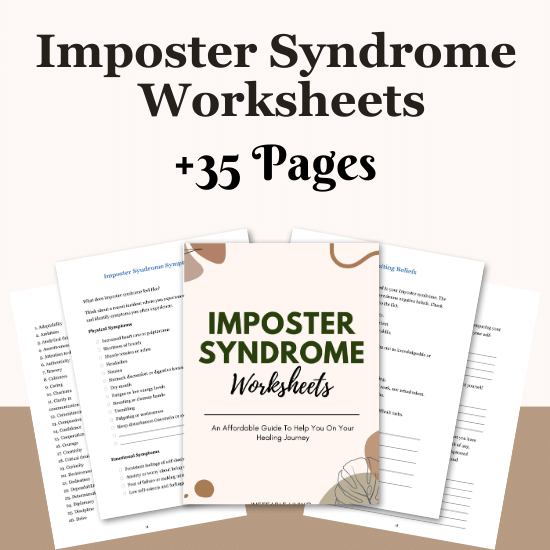
These prompts can help you examine the beliefs behind imposter syndrome, notice evidence of your competence, challenge unrealistic standards, and build confidence based on experience rather than constant reassurance.
Imposter Syndrome Journal Prompts for Building Confidence
- What situations make me feel most like an imposter, and what am I afraid people will discover about me?
- What do I usually tell myself when I feel less capable than the people around me?
- What evidence do I actually have that I am qualified for the role, opportunity, or responsibility I currently have?
- What accomplishments do I regularly minimize because they now feel normal to me?
- What skills do I have today that I once had to work hard to learn?
- What difficult problems have I successfully handled in the past year?
- What positive feedback have I received that I tend to dismiss or explain away?
- When someone compliments me, what does my mind immediately say to make the compliment “not count”?
- What would happen if I allowed positive feedback to count as real evidence?
- What successes have I attributed entirely to luck, and what did I personally contribute to those outcomes?
- When I say, “Anyone could have done that,” is that actually true?
- What knowledge or ability do other people regularly come to me for?
- What do I know now that someone completely new to my field or role would still need to learn?
- What do I believe a “truly competent” person should know or be able to do, and are those expectations realistic?
- What do I expect myself to know that I would never expect another person at my experience level to know?
- What is one thing I do not know right now, and how could I learn it without turning the knowledge gap into a judgment about myself?
- When I make a mistake, what do I immediately make that mistake mean about me?
- What would be a more specific and accurate interpretation of my most recent mistake?
- If someone I respected made the same mistake, how would I evaluate them?
- Why do I allow other people to be imperfect while expecting myself to prove my competence constantly?
- What mistakes have actually helped me become better at what I do?
- What is something I used to find difficult that now feels relatively easy because I practiced it?
- When something requires effort, why do I sometimes interpret that effort as evidence that I lack ability?
- What is one example of something difficult that I eventually became competent at?
- What do I overprepare for because I am afraid of appearing incompetent?
- What would reasonable preparation look like for that situation?
- How would my life change if I prepared enough rather than trying to prepare for every possible problem?
- What am I currently postponing because I keep telling myself I need more experience, training, or confidence first?
- What specific skill am I actually missing before I take that step?
- If I already have enough ability to begin, what am I really waiting for?
- What opportunity have I rejected myself from before anyone else had the chance to decide whether I was qualified?
- What would I apply for, attempt, submit, or ask for if I trusted my ability 20% more?
- What is one small action I could take this week before I feel completely ready?
- What do I fear would happen if I openly admitted, “I don’t know”?
- What evidence do I have that asking a reasonable question would actually make people think less of me?
- What could asking for help allow me to learn or accomplish more efficiently?
- Who do I compare myself with most often, and what information about their struggles, mistakes, or learning process am I unable to see?
- Am I comparing myself with someone who has significantly more experience than I do?
- What would a fair comparison look like for my current stage?
- What strengths do I overlook when I focus on someone else’s strengths?
- What achievement did I once believe would finally make me feel legitimate?
- After I achieved it, how did I move the goalpost?
- What would happen if I stopped requiring another accomplishment before allowing myself to believe I am capable?
- When I receive criticism, what does the feedback literally say, and what negative meaning do I add to it?
- What is one area where I genuinely need improvement without that weakness meaning I am incompetent overall?
- What would it look like to view myself as both capable and still learning?
- What is something I handled better recently than I would have handled it one or two years ago?
- What evidence from my actual life contradicts the thought, “I don’t belong here”?
- If confidence did not mean “I know everything,” what could confidence mean instead?
- Complete this statement: “I do not need to prove that I know everything to recognize that I have earned the skills, experience, and knowledge I already have. The next way I want to trust myself more is ______.”
What Helps With Imposter Syndrome
1. Separate Feelings From Evidence
Try:
“I feel underqualified. What does the evidence actually say?”
Your feeling deserves attention, but it is not automatically an accurate evaluation.
2. Stop Disqualifying Your Success
Ask:
“What did I personally contribute to this outcome?”
Acknowledge help and luck when they existed without erasing your own effort and skill.
3. Keep Competence Specific
Instead of:
“I don’t know anything.”
ask:
“What specifically don’t I know?”
One knowledge gap is easier to address than a global judgment about yourself.
4. Normalize Learning
Competence does not mean:
“I know everything.”
It can mean:
“I know enough to handle much of this, recognize what I don’t know, and learn when necessary.”
5. Treat Mistakes as Information
Ask:
“What does this mistake teach me?”
not:
“What does this mistake prove about me?”
Correct the problem without turning it into an identity judgment.
6. Use the Same Standards You Use for Other People
If someone else asked for help or made a mistake, would you immediately decide they were incompetent?
Probably not.
Apply the same standard to yourself.
7. Let Compliments Count
Practice saying:
“Thank you.”
Then resist explaining why the person is wrong.
Positive feedback is also evidence.
8. Track Your Accomplishments
Keep a record of:
- Skills you have developed.
- Problems you solved.
- Positive feedback.
- Difficult situations you handled.
- Things you can do now that you could not do before.
Your memory should contain evidence of competence as well as evidence of mistakes.
9. Stop Waiting for Complete Confidence
Ask:
“Do I have enough ability to reasonably try?”
Confidence often develops after repeated experience rather than before it.
10. Take Opportunities Before You Feel Perfectly Ready
If you are reasonably qualified, consider:
- Applying.
- Speaking up.
- Submitting.
- Taking responsibility.
- Trying.
Let reality give you information instead of allowing self-doubt to make every decision.
11. Build Confidence Through Evidence
Confidence is not:
“I know I will succeed.”
A more durable form is:
“I have handled difficult things before. I can learn. I can ask questions. I can make mistakes and correct them.”
12. Allow Yourself to Be Capable and Still Learning
These statements can both be true:
“I am good at what I do.”
and:
“I still have things to learn.”
They do not cancel each other out.