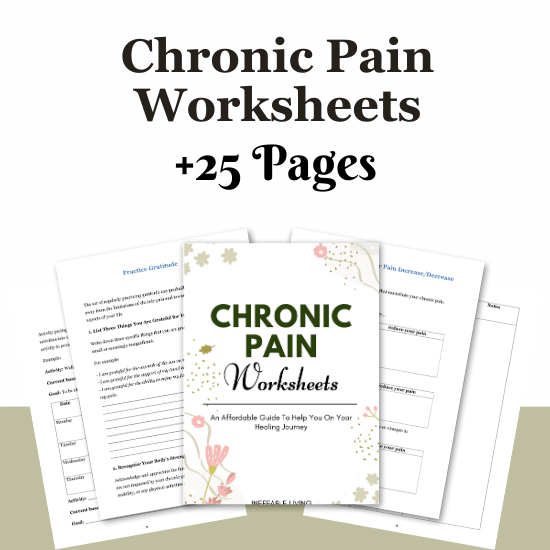
These prompts can help you notice patterns in your pain, energy, emotions, routines, boundaries, stress, and daily functioning so you can better understand what makes life harder and what supports you.
Chronic Pain Journal Prompts for Understanding Your Needs and Patterns
- What does a typical lower-pain day look like for me?
- What does a typical high-pain day look like?
- What usually changes first when my pain begins to increase?
- Are there certain times of day when my pain tends to feel easier or harder?
- What activities seem to increase my pain most often?
- What activities can I usually tolerate better than I expect?
- What do I tend to do on better days that leaves me struggling afterward?
- Do I have a pattern of doing too much when I feel better and then needing a long recovery?
- What would a more sustainable version of a “good day” look like?
- What are the earliest signs that I am reaching my physical limit?
- How do I usually respond when I notice those signs?
- What makes me keep pushing even when my body is telling me to stop?
- What thoughts make rest difficult for me?
- Do I believe I have to earn rest? Where might that belief come from?
- What would it look like to rest before I become completely exhausted?
- Which daily tasks take more energy than other people may realize?
- Which tasks could be simplified, shortened, adapted, or delegated?
- What responsibilities am I still trying to handle exactly the way I did before chronic pain?
- What would a more realistic standard look like now?
- Which parts of my routine are genuinely helpful, and which ones create unnecessary pressure?
- What does my ideal difficult-pain-day routine look like?
- What are the absolute essentials I need to focus on during a high-pain day?
- What could I allow myself to postpone more often?
- What practical shortcuts make my life easier but sometimes trigger guilt?
- What would change if I saw those shortcuts as tools rather than failures?
- When am I most likely to say yes even though I know I do not have the capacity?
- Whose disappointment is hardest for me to tolerate when I need to say no?
- What boundary do I most need around my energy right now?
- What is one sentence I could use to communicate that boundary clearly?
- When do I tend to overexplain my pain or limitations?
- What am I hoping other people will understand when I overexplain?
- Which people in my life make me feel understood and supported?
- Which interactions leave me feeling more exhausted, guilty, dismissed, or misunderstood?
- What kind of support is actually helpful to me on difficult days?
- What kind of support sounds helpful but usually makes me feel worse?
- What do I wish people understood about the difference between what I can do once and what I can sustain regularly?
- What emotions tend to become stronger when my pain increases?
- Do I notice more frustration, sadness, fear, irritability, guilt, or hopelessness during flares?
- What thoughts usually appear when my pain is especially difficult?
- Which of those thoughts are facts, and which are predictions or judgments?
- What do I tell myself about my worth when I am less productive?
- How would I speak to someone else dealing with the same limitations?
- What would it look like to apply that same standard to myself?
- What parts of my old life do I miss most?
- What needs or values were those activities meeting for me?
- Are there different ways I could still meet some of those needs now?
- What parts of my identity have become overshadowed by chronic pain?
- Who am I besides someone who lives with pain?
- What patterns have I noticed that genuinely help me function better, even if they do not eliminate the pain?
- Complete this statement: “The most important thing I am learning about living with chronic pain is ______, and one change I want to make based on that understanding is ______.”