Life’s toughest seasons often leave you feeling powerless, exhausted, and unsure how to move forward. Therapy hacks — small, practical tools drawn from evidence-based practices — can help you find grounding and direction even in overwhelming times.
When You Might Need Them Most
- You wake up with dread and don’t know why
- You feel like crying but can’t — or can’t stop
- You’re overthinking conversations and worst-case scenarios
- You feel irritable or snappy with people you love
- You’re emotionally flat but overwhelmed inside
- You’ve lost touch with your sense of purpose
- You’re tempted to self-sabotage or shut down
These are not failures.
They’re distress signals — your mind and body asking for something safe, something stabilizing.
When Life Is Hard — These 10 Therapy Hacks Help
1. Name what you’re going through instead of minimizing it
Hardship feels heavier when you pretend it’s “not that bad.” Naming your struggle validates your experience.
Say: “This is grief,” “This is burnout,” or “This is heartbreak.”
Giving it a name creates space to respond rather than deny.
2. Use grounding techniques to anchor in the present
Pain pulls you into past regrets or future fears. Grounding helps you find safety in the now.
Try the 5–4–3–2–1 method: notice 5 things you see, 4 you feel, 3 you hear, 2 you smell, 1 you taste.
This anchors your nervous system and gives your mind a break from spiraling.
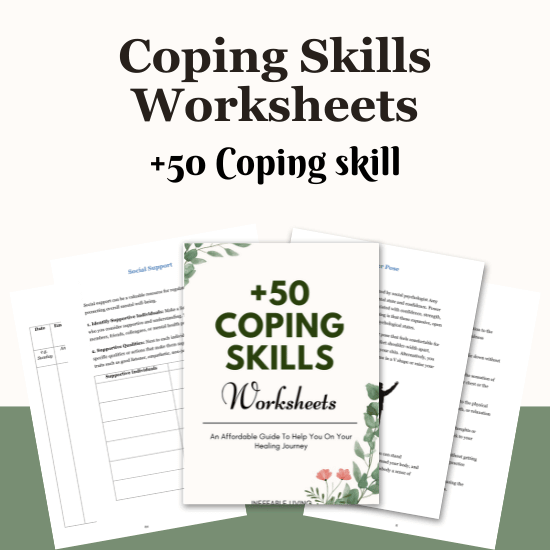
Related: Best 99 Coping Skills (+FREE Coping Worksheets)
3. Shrink the day into micro-steps
When everything feels impossible, make your day smaller.
Break tasks into micro-steps: drink water, send one text, fold one piece of laundry.
Each micro-step is proof that you can keep going even when energy is low.
4. Externalize the inner critic
Hard times often trigger harsh self-talk. Writing down the critic’s voice helps you see it’s not the whole truth.
Example: write “You’re failing” on paper. Then answer with a kinder perspective: “I’m carrying more than usual, and I’m still showing up.”
This creates distance between you and the inner critic.
5. Create a self-soothe kit for crisis moments
When life is hard, your nervous system needs quick comfort.
Fill a small box with grounding objects: calming scents, a soft item, uplifting notes, or photos.
When overwhelm hits, your kit becomes an anchor of safety.
Related: 10 Most Common Unhealthy Coping Mechanisms (And How to Replace Them)
6. Practice “opposite action” to shift mood states
Therapy teaches that action can change emotion.
If sadness urges you to isolate, call a friend. If anxiety makes you want to avoid, take one small step toward the task.
These opposite actions gently move you out of stuck emotional loops.
7. Limit exposure to stress amplifiers
News, social media, and toxic conversations intensify pain. Curate your inputs.
Unfollow or mute accounts that drain you. Replace doomscrolling with calming activities like journaling or listening to soothing music.
Protecting your environment gives your mind room to heal.
8. Borrow nervous system calm from others
Sometimes you can’t calm down alone, but co-regulation helps.
Sit with someone safe, even in silence. Borrow their steady breathing, tone, or presence.
The nervous system responds to safe connection more quickly than to isolation.
Related: Top 4 DBT Skills to Go from Crisis to Calm
9. Reframe hardship as temporary, not permanent
Pain feels endless when you see it as forever.
Write: “This is a season, not my whole story.”
Reminding yourself of impermanence makes the struggle more bearable.
10. Hold on to “tiny joys” alongside the pain
Hardship narrows your vision to only suffering. Tiny joys help widen the lens.
Notice one daily moment: warm tea, a pet’s presence, a kind text.
Recording these moments proves life holds both pain and beauty at once.
Related: How to Overcome Emotional Reasoning & Become Less Emotionally Reactive?
Conclusion
When life feels unbearable, therapy hacks offer small anchors of relief and strength. They don’t erase the pain, but they help you carry it differently — with more steadiness, more compassion, and more connection. Each small practice builds resilience, reminding you that even in hardship, you are not powerless.