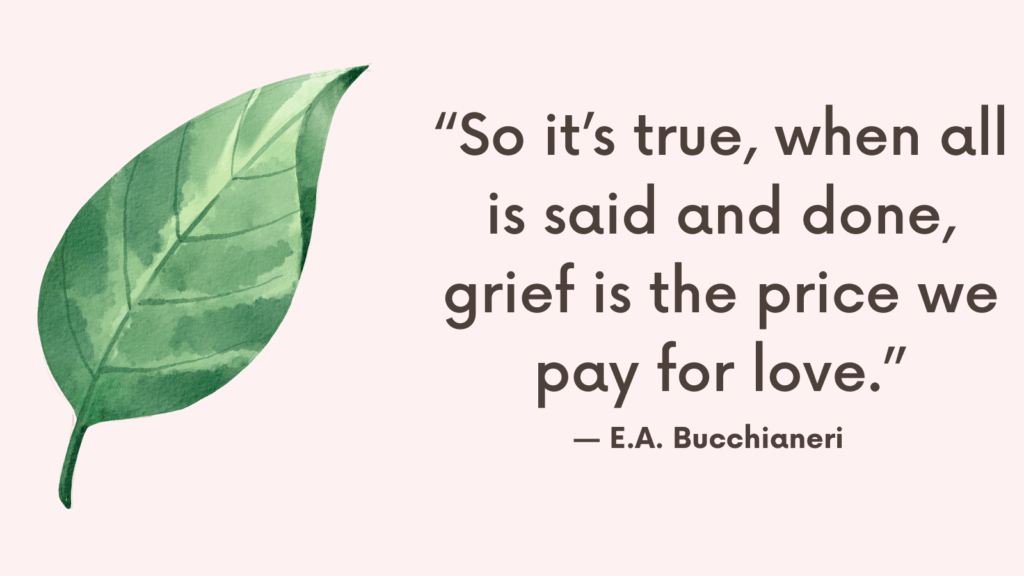
Sometimes grief doesn’t soften with the passing years — it stays vivid, sharp, and alive, surfacing when you least expect it. This doesn’t mean you’re broken or grieving “wrong.” It means your loss is deeply woven into your life, and your relationship to it needs understanding, not erasure. When the pain of grief doesn’t fade, the goal isn’t to make it disappear, but to find new ways to live alongside it — gently, meaningfully, and without losing yourself in it.
The Myth of “Moving On”
You’re often told that grief has stages, that time heals if you let it. But time alone doesn’t heal—it only passes. Healing comes from how you live inside that time. The idea of “moving on” can make you feel like you’ve failed, but real healing isn’t about leaving the person or experience behind; it’s about learning how to carry it differently.
Related: Grieving and Numb? These Worksheets Can Help You Sit with Loss and Heal
How to Cope When the Pain of Grief Doesn’t Fade Over Time?
1. Acknowledge That Your Grief Is Still Valid
Many people believe grief should have an expiration date. But love has no timeline, and neither does mourning. Give yourself permission to still feel pain — it’s not regression, it’s reverence. The persistence of grief means the connection still matters.
2. Stop Comparing Your Healing to Others
Grief looks different for everyone. Some move on visibly; others grieve quietly for decades. Comparison creates pressure and shame. Your pace is not a reflection of weakness — it’s a reflection of the depth and complexity of your bond.
3. Recognize the Form Grief Has Taken
When grief endures, it often changes shape — it may show up as exhaustion, anxiety, numbness, or bursts of anger. Instead of fighting these feelings, see them as grief’s new language. When you understand how your grief speaks, you can respond with care instead of confusion.
4. Revisit Unprocessed Aspects of the Loss
Sometimes, long-lasting grief lingers because certain emotions were never fully felt — guilt, anger, regret, or helplessness. Consider journaling or therapy to explore what might have been left unspoken. The goal isn’t to reopen wounds, but to give voice to what’s still unacknowledged.
5. Create an Ongoing Connection With What You Lost
You don’t have to “let go” — you can learn to hold differently. Speak their name, visit a meaningful place, or create rituals of remembrance. Maintaining a continuing bond honors your love in a way that soothes rather than re-injures.
Related: Best 21 Grief Journaling Prompts (+FREE Grief Worksheets PDF)
6. Allow New Meanings to Coexist With the Pain
Long-term grief can feel stuck when the loss is only seen through pain. Try exploring how your experience has changed you — your empathy, resilience, or spiritual depth. Meaning doesn’t replace grief; it sits beside it, giving shape to your survival.
7. Rebuild Emotional Safety in Your Body
Prolonged grief often leaves the nervous system on alert. Ground yourself through slow breathing, mindful movement, or gentle touch — practices that remind your body it’s safe to relax again. Healing requires not just thinking about grief, but physically releasing it.
8. Reconnect With Life Without Feeling Disloyal
It’s common to feel guilty for moments of joy, as if happiness dishonors what you lost. In truth, joy honors life itself. You can love what’s gone and still live fully — grief and joy are not opposites; they’re different expressions of love.
Related: Best +30 Grief Activities For Adults (+FREE Worksheets PDF)
9. Let Go of the Idea That Acceptance Means Forgetting
Acceptance doesn’t mean indifference. It means allowing the loss to be part of your story — not the whole story. When you stop trying to erase grief, you can begin to integrate it, letting it coexist with laughter, growth, and new experiences.
10. Seek Grief-Informed Support
If the pain feels immovable, working with a grief therapist or joining a support group can help. Long-term grief sometimes needs professional guidance to untangle its roots — not because you’re weak, but because you deserve to heal with support, not solitude.
11. Allow Ritual and Memory to Evolve
You may find that old ways of remembering no longer bring comfort. Adjust them. Maybe you light a candle less often but talk about the person more. Maybe you honor them through acts of kindness. Grief adapts, and your rituals can too.
12. Replace Judgment With Gentle Curiosity
Instead of asking, “Why am I still grieving?” try, “What does my grief need from me today?” This subtle shift turns self-criticism into compassion and invites your heart to guide your healing instead of your mind policing it.
Related: Grief Comes In Waves: Top 12 Lessons From Grief No One Talks About

Conclusion
When grief doesn’t fade over time, it’s not a failure — it’s a reflection of lasting love and unprocessed tenderness. You’re not meant to erase the pain, but to learn to live alongside it with grace. Healing means letting grief become one voice among many in your life — not the only one. Over time, the sharpness may remain, but it softens in how it’s carried — transforming from a wound you fight to a story you honor.