Guilt can be healthy when it points us toward repair or growth — but when left unchecked, it turns inward and becomes self-punishment. Instead of motivating change, it drains your energy, undermines self-worth, and keeps you trapped in cycles of regret. Learning to work with guilt, not against yourself, allows you to grow without shame.
What Guilt Really Is
Guilt is a natural emotional response that tells you you’ve done something that conflicts with your values. It’s meant to guide repair—not create endless suffering. But when guilt stays unresolved, it can shift from healthy accountability into self-punishment. Instead of learning from the mistake, you start believing you are the mistake.
Why Guilt Turns Into Punishment
- Unresolved shame: You confuse “I did something wrong” with “I am wrong.”
- Perfectionism: Believing you must never disappoint anyone.
- Fear of forgiveness: Thinking that letting go means you don’t care enough.
- Learned behavior: Growing up where mistakes were met with criticism, not compassion.
- Control through suffering: Punishing yourself feels like the only way to regain moral balance.
Common Signs of Self-Punishment
- Constantly replaying what happened in your mind.
- Avoiding pleasure or success because you feel undeserving.
- Apologizing excessively or overcompensating.
- Withdrawing from people who care about you.
- Using harsh self-talk that reinforces shame.
Emotional Triggers That Keep It Going
- Someone’s disappointment or silence after a mistake.
- Seeing reminders of what you did or failed to do.
- Comparing your behavior to others who seem “better.”
- Believing forgiveness must come from others before it can come from you.
Related: Best 7 Self Sabotage Books
Why Self-Punishment Feels Safer Than Forgiveness
Punishing yourself gives the illusion of control—you can’t undo what happened, but you can make yourself “pay” for it. It keeps you from feeling powerless, yet it also traps you in emotional debt that never gets repaid. Real accountability heals; punishment only repeats the hurt.
How to Stop Turning Guilt Into Self-Punishment?
1. Recognize the Difference Between Guilt and Shame
Guilt says, “I did something wrong.” Shame says, “I am something wrong.” When guilt becomes toxic, it shifts from behavior-focused to identity-focused, making it impossible to forgive yourself.
Try This
When guilt arises, ask: “Did I make a mistake, or am I judging who I am?” Naming the difference helps you stay grounded in compassion instead of self-attack.
2. Notice How You Punish Yourself
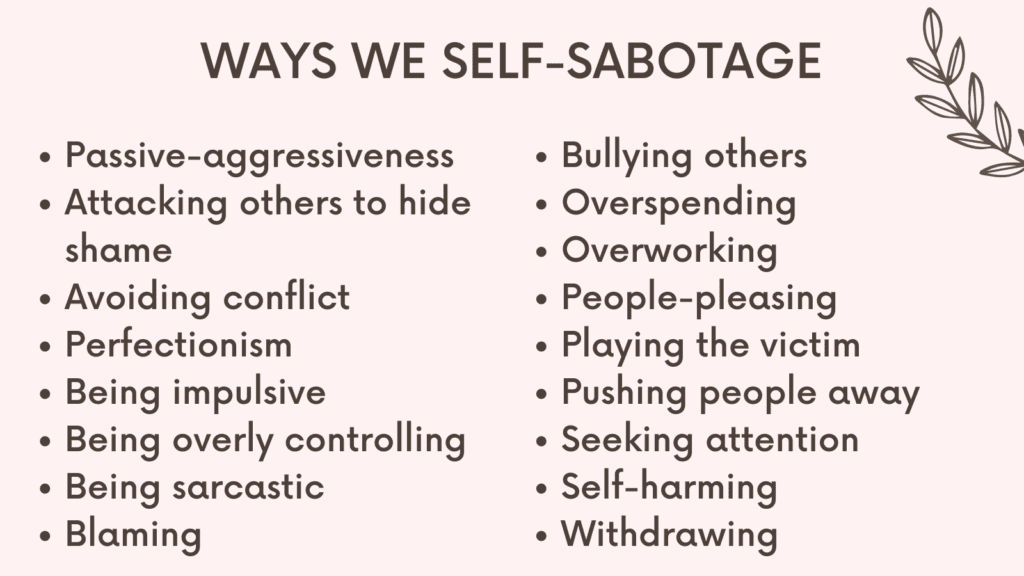
Self-punishment can look subtle — replaying mistakes, denying yourself rest, or believing you don’t deserve happiness. These behaviors may feel like penance but only deepen pain.
Try This
Write down what self-punishment looks like for you — avoiding joy, overworking, isolating — and ask, “Is this helping me grow or just hurting me more?”
3. Understand What Your Guilt Is Trying to Teach You
Guilt often carries a message — a call to realign with your values. Ignoring or suppressing it leads to self-condemnation, while listening to it with curiosity leads to change.
Try This
Ask, “What value did I violate, and how can I live it better moving forward?” Turning guilt into guidance transforms it from a whip into a compass.
Related: Best 21 Self Sabotage Journal Prompts
4. Make Repair Instead of Repetition
Self-punishment keeps you circling the same emotional wound without healing it. Repair — through apology, changed behavior, or self-accountability — breaks the cycle.
Try This
If possible, make amends or take a concrete action that aligns with who you want to be now. Growth, not suffering, is what makes guilt meaningful.
5. Stop Measuring Forgiveness by How Bad You Feel
We often equate feeling awful with being sorry enough. But prolonged guilt doesn’t prove remorse — it prevents healing. You don’t earn forgiveness through pain.
Try This
Remind yourself: “Feeling miserable doesn’t make me more moral — learning and changing do.” Self-compassion sustains accountability better than shame ever could.
6. Replace Harsh Self-Talk With Accountability
Many people fear that if they’re kind to themselves, they’ll stop caring. But kindness and accountability can coexist. You can hold yourself responsible without cruelty.
Try This
Speak to yourself as you would to a loved one who made the same mistake. Say, “You did something you regret, but you’re trying to make it right.”
Related: Best 18 Self Compassion Journal Prompts (+FREE Worksheets)
7. Identify Where the Guilt Really Belongs
Some guilt isn’t yours to carry — especially when it comes from unrealistic standards, family conditioning, or emotional manipulation.
Try This
Ask, “Whose voice is this guilt speaking in — mine, or someone else’s?” If it’s rooted in control or fear, you’re allowed to set it down.
8. Learn to Tolerate the Discomfort of Self-Forgiveness
Forgiveness doesn’t erase responsibility — it ends self-torture. Letting go of guilt can feel strange or even unsafe if you’re used to carrying it as proof that you care.
Try This
When you start to feel unworthy of peace, remind yourself: “I’m allowed to heal even while I’m still learning.”
Related: How To Be Gentle With Yourself? Top 5 Ways To Practice Self-Compassion
9. Replace Rumination With Reflection
Rumination repeats the pain; reflection transforms it. Reflection involves learning and action, while rumination just replays shame.
Try This
When guilt thoughts arise, write: “Here’s what happened, what I learned, and how I’ll do better.” End with one compassionate statement toward yourself.
10. Recognize That Self-Punishment Can Be a Form of Control
Beating yourself up gives the illusion of control — if you suffer enough, maybe you can undo the past. But suffering doesn’t reverse what happened; it just prolongs disconnection.
Try This
Say to yourself, “I can’t change what happened, but I can choose what happens next.” Direct energy toward repair, not retribution.
11. Practice Daily Self-Compassion Rituals
Healing from guilt isn’t a single act — it’s a daily retraining of how you relate to yourself. Small acts of gentleness rebuild trust from the inside out.
Try This
End the day with one kind acknowledgment: “I’m trying, and that matters.” Repetition of compassion slowly rewires the guilt response.
Related: Best 10 Self Compassion Books
12. Seek Support When Guilt Feels Overwhelming
If guilt feels constant, intrusive, or linked to trauma, therapy can help you process it safely. Sometimes guilt masks deeper emotions like grief or fear of unworthiness.
Try This
Work with a therapist to unpack where guilt originated and learn tools for self-forgiveness that don’t rely on endless self-criticism.
Related: Top 18 Self Esteem Exercises (+FREE CBT For Self-Esteem Worksheets PDF)
Conclusion
Turning guilt into self-punishment keeps you trapped in the past. Real healing begins when you listen to guilt as a teacher, not a judge. You don’t have to earn your worth through suffering — you earn it through honesty, repair, and compassion. Forgiving yourself isn’t letting yourself off the hook; it’s freeing yourself to live with integrity, love, and peace again.