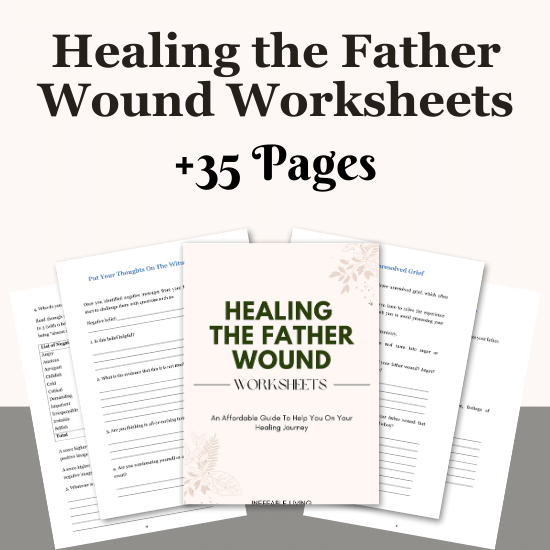
A “father wound” is not a clinical diagnosis. It is an informal way of describing the lasting emotional effects of a painful, absent, critical, inconsistent, rejecting, controlling, or emotionally unavailable relationship with a father or father figure.
Healing does not mean excusing what happened or forcing reconciliation. It means understanding what you learned from the relationship, separating those lessons from your identity, and practicing healthier ways of relating to yourself and others.
30 Father Wound Healing Exercises That Actually Help
1. Write Down What You Actually Needed
Complete:
“What I needed from my father was…”
Be specific.
Maybe you needed:
- Encouragement.
- Protection.
- Consistency.
- Affection.
- Attention.
- Acceptance.
- Guidance.
- Interest in your life.
Naming the unmet need is more useful than simply saying, “My childhood was difficult.”
2. Separate What Happened From What You Believed It Meant
Divide a page into two columns.
What happened:
“My father criticized me frequently.”
What I learned:
“I am never good enough.”
This exercise helps you see that the event and the meaning you attached to it are not identical.
3. Identify the Beliefs You Still Carry
Finish these sentences:
Because of my relationship with my father, I learned that love is ______.
I learned that men/authority figures are ______.
I learned that my needs are ______.
I learned that mistakes mean ______.
Then ask which beliefs still fit your adult life.
4. Identify Your Father’s Voice in Your Inner Critic
Write down the harsh things you commonly tell yourself.
For example:
“You should have done better.”
“You are lazy.”
“You always mess things up.”
Then ask:
“Does this sound like my own considered opinion, or something I learned to repeat?”
5. Rewrite One Critical Message
Take:
“You are never good enough.”
Replace it with something accurate:
“I do not need to be perfect to be worthy of respect.”
Avoid unrealistic affirmations. Aim for believable, balanced statements.
6. Make a “What Was Not My Fault” List
Write down experiences you blamed yourself for as a child.
For example:
- His anger.
- His absence.
- His emotional distance.
- His drinking.
- His lack of affection.
- His inability to communicate.
Children often assume responsibility for situations they had very little control over.
7. Make a “What Is My Responsibility Now” List
Healing is not only about the past.
Write what belongs to you now:
- Setting boundaries.
- Choosing healthier relationships.
- Asking for help.
- Changing unhealthy patterns.
- Learning different communication skills.
This separates responsibility from blame.
8. Write the Apology You Needed
Write the apology you wish you had received.
Include:
- What happened.
- What hurt.
- What should have happened instead.
- What responsibility you wish he had taken.
You do not have to send it.
The exercise helps clarify what remains unresolved.
9. Write an Unsent Letter
Write everything you never felt able to say.
You might include:
“What hurt me was…”
“What I wish you understood is…”
“What I needed was…”
“What I am no longer willing to carry is…”
The purpose is expression, not confrontation.
10. Write What You Wish Had Been Different
Create a list beginning:
“I wish…”
For example:
“I wish you had asked about my day.”
“I wish I had felt safe telling you when I made mistakes.”
This can help you grieve what was missing instead of minimizing it.
11. Practice Letting Two Truths Exist
Complete statements such as:
“My father may have had his own struggles, and his behavior still affected me.”
“I can understand him without excusing everything.”
“There may have been good moments, and there was still real hurt.”
Healing does not require reducing the relationship to entirely good or entirely bad.
12. Identify What You Are Still Trying to Prove
Ask:
“What am I still trying to prove to my father?”
Maybe:
- That you are successful.
- That you are lovable.
- That you were right.
- That you did not need him.
- That you are worthy of respect.
Then ask:
“What would my life look like if I stopped organizing it around proving this?”
13. Practice Self-Approval Before Seeking External Approval
After completing something important, do not immediately ask someone else what they think.
First write:
What I think I did well:
What I would improve:
What I am proud of:
Allow your own evaluation to exist before receiving someone else’s.
14. Keep an Evidence File
Collect evidence that challenges old negative beliefs.
Include:
- Compliments.
- Achievements.
- Difficult situations you handled.
- Positive feedback.
- Skills you developed.
- Decisions you are proud of.
Return to it when your mind says:
“I am not enough.”
15. Practice Making Small Decisions Without Approval
Choose something without asking:
“Do you think this is okay?”
Start with small decisions.
For example:
- What to wear.
- What to buy.
- How to spend your afternoon.
- Which hobby to pursue.
This builds trust in your own judgment.
16. Practice Saying No Without Defending Yourself
Choose a low-stakes situation.
Say:
“No, I can’t do that.”
Avoid giving five reasons.
Notice the discomfort without immediately changing your answer.
17. Practice Tolerating Someone’s Disappointment
After setting a reasonable boundary, notice the urge to fix the other person’s reaction.
Ask:
“Did I behave unfairly, or are they simply disappointed?”
You can survive another person’s disappointment without automatically abandoning your boundary.
18. Create a Boundary List for Your Father
If you still have contact, write:
Topics I will discuss:
Topics I will not discuss:
Behavior I will leave the conversation for:
How much contact feels manageable:
Clarity with yourself comes before clarity with someone else.
19. Practice One Boundary Sentence
Choose one sentence and rehearse it.
For example:
“I am not discussing my weight.”
“If you start insulting me, I am ending the call.”
“I have already made my decision.”
Practice saying it calmly.
20. Stop Repeating the Same Explanation
If you have already explained a boundary several times, practice:
“I’ve explained my position. I don’t have anything else to add.”
Healing may require accepting that being understood is not always necessary for maintaining a limit.
21. Track What Triggers Old Reactions
For one week, record moments when you suddenly feel:
- Small.
- Afraid.
- Defensive.
- Ashamed.
- Desperate for approval.
Write:
What happened?
What did I immediately think?
What did it remind me of?
What is different about the present situation?
22. Use a “Then vs Now” Exercise
When something triggers you, write:
Then:
“I was a child and depended on him.”
Now:
“I am an adult and have choices.”
Continue with the differences between the old situation and the current one.
This can help prevent the past from automatically defining the present.
23. Practice Asking for Help
Choose one manageable situation where you would usually do everything yourself.
Ask someone:
“Could you help me with this?”
If self-reliance became a survival strategy, receiving help can feel surprisingly difficult.
24. Practice Receiving Without Immediately Repaying
When someone does something kind, resist immediately saying:
“I’ll do something for you too.”
Try simply:
“Thank you. I appreciate that.”
Let yourself experience care without turning it into a debt.
25. Challenge Your Attraction to Familiar Relationship Patterns
Think about relationships where you felt strongly pulled toward someone.
Ask:
“What felt familiar about this person?”
Were they:
- Critical?
- Distant?
- Inconsistent?
- Hard to please?
Then ask:
“Was I drawn to safety, or to familiarity?”
26. Create a Healthy Relationship Checklist
Write down what you want relationships to include.
For example:
- Consistency.
- Respect.
- Accountability.
- Mutual effort.
- Emotional availability.
- Boundaries.
- Honest communication.
Use this list to evaluate actual behavior rather than chemistry alone.
27. Practice Repair After Conflict
If conflict once meant criticism, withdrawal, or fear, practice a different pattern.
After a disagreement, try:
“I want to come back to what happened.”
“Here is what I think I could have handled better.”
“Here is what I still need from you.”
Healthy conflict includes repair, not just avoidance.
28. Grieve the Relationship You Wanted
Write:
“The father I needed would have…”
Then list what you wish had been different.
This exercise can be painful, but grief often becomes necessary when you stop waiting for the past to change.
29. Decide What You Are No Longer Waiting For
Complete:
“I am no longer putting my life on hold waiting for…”
Maybe:
- An apology.
- Approval.
- Recognition.
- Affection.
- Accountability.
- A completely different relationship.
This does not mean you stop caring.
It means your healing no longer depends entirely on someone else’s change.
30. Create a Personal Father-Wound Healing Plan
Write four sections:
What I learned:
What beliefs or patterns came from the relationship?
What I want to unlearn:
What no longer fits my life?
What I want to practice:
Boundaries, self-trust, asking for help, healthier relationships, tolerating disagreement.
What I will do differently:
Choose three specific actions for the next month.
For example:
“I will stop asking for approval before making small decisions.”
“I will speak up the first time a boundary is crossed.”
“I will pay more attention to consistency than to emotional intensity in relationships.”