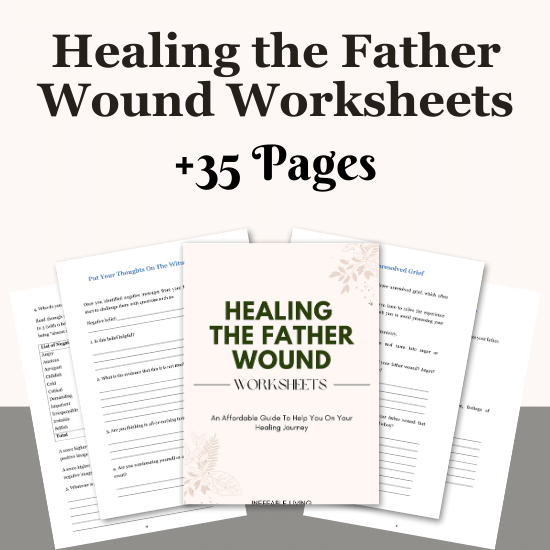
A “father wound” is an informal term used to describe the lasting emotional effects of having a painful, absent, inconsistent, rejecting, frightening, highly critical, or emotionally unavailable relationship with a father or father figure.
It is not a mental-health diagnosis, and having difficulties with your father does not automatically mean every adult struggle comes from that relationship. But early experiences with a caregiver can influence what you learn about safety, love, approval, conflict, trust, and your own worth.
A father wound can develop whether a father was physically absent or physically present but emotionally unavailable.
What Can Cause a Father Wound?
Common experiences can include:
- A father being absent through separation, abandonment, death, incarceration, work, or other circumstances.
- Emotional unavailability.
- Rarely receiving affection, encouragement, or interest.
- Constant criticism.
- Feeling that nothing you did was good enough.
- Anger, intimidation, or unpredictable behavior.
- Physical, emotional, or verbal abuse.
- Favoritism between siblings.
- Rejection of your personality, interests, appearance, or choices.
- A father who was present only when you achieved something.
- Addiction or other serious problems that made the household unpredictable.
- Broken promises and inconsistency.
- Being expected to earn attention.
- Being forced into an adult role too early.
- Watching your father mistreat other family members.
- Feeling responsible for keeping him happy.
- Having little protection when you needed it.
- A father who controlled rather than guided.
- A father who avoided emotional conversations.
- Growing up believing your needs were inconvenient.
Different people can experience the same childhood situation very differently. What matters is not only what happened, but what you came to believe about yourself and relationships because of it.
25 Signs a Father Wound May Be Affecting You in Adulthood
1. You Feel Like You Have to Earn Love
You may believe people will value you only when you are useful, successful, attractive, agreeable, or accomplishing something.
Love can feel conditional rather than something you can simply receive.
2. You Constantly Seek Approval
Praise may temporarily make you feel secure.
Without it, you quickly wonder:
“Am I doing enough?”
You may rely heavily on other people’s approval to decide how you feel about yourself.
3. Criticism Feels Deeply Personal
A small correction may feel less like:
“I made a mistake.”
and more like:
“I am disappointing someone again.”
The emotional reaction may feel larger than the current situation.
4. You Have a Strong Fear of Disappointing People
You may organize your decisions around avoiding other people’s disappointment.
This can make saying no, changing your mind, or making independent choices difficult.
5. You Become a Perfectionist
If approval once depended heavily on achievement, you may learn:
“If I do everything perfectly, I will be safe from criticism.”
Mistakes can then feel unusually threatening.
6. You Never Feel Good Enough
You may accomplish something and almost immediately notice what could have been better.
The internal standard keeps moving.
7. You Struggle to Believe Compliments
Someone tells you:
“You did really well.”
Your mind responds:
“They’re just being nice.”
Positive feedback may struggle to reach the part of you that still expects criticism.
8. You Feel You Have Something to Prove
You may constantly try to demonstrate that you are:
- Successful.
- Strong.
- Independent.
- Intelligent.
- Worth respecting.
Achievement can become an attempt to settle an old question about your worth.
9. You Have Difficulty Asking for Help
Depending on someone may feel uncomfortable.
You may think:
“I should handle this myself.”
Extreme independence can sometimes develop when relying on caregivers did not feel dependable.
10. You Feel Uncomfortable Needing Anyone
You may want closeness while also feeling vulnerable or ashamed when you genuinely need support.
Need can feel dangerous because it creates the possibility of disappointment.
11. You Expect People to Let You Down
Even when someone is reliable, part of you may remain prepared for:
- Abandonment.
- Broken promises.
- Rejection.
- Sudden emotional withdrawal.
Past inconsistency can shape expectations of current relationships.
12. You Have Difficulty Trusting
You may think:
“People eventually show you who they really are.”
Caution can be useful, but persistent distrust may make genuine closeness difficult.
13. You Are Drawn to Emotionally Unavailable People
A distant relationship can feel strangely familiar.
You may repeatedly become invested in people who:
- Avoid commitment.
- Give inconsistent attention.
- Keep you guessing.
- Make affection difficult to obtain.
Familiar does not necessarily mean healthy.
14. You Work Hard for Small Amounts of Affection
You may tolerate inconsistency while focusing intensely on occasional moments of closeness.
This can recreate the experience of having to earn someone’s attention.
15. You Fear Abandonment
You may become highly sensitive to:
- Delayed messages.
- Changes in tone.
- Requests for space.
- Relationship conflict.
Ordinary distance can feel like the beginning of rejection.
16. You Pull Away Before Someone Can Reject You
Instead of waiting to discover whether someone will stay, you may create distance first.
The unconscious rule can become:
“If I leave first, I cannot be abandoned.”
17. You People-Please
You may quickly notice what other people want and adjust yourself accordingly.
Keeping others satisfied can feel safer than risking disapproval.
18. You Struggle to Set Boundaries
Saying no may trigger:
- Guilt.
- Fear.
- Anxiety.
- Worry that someone will withdraw.
You may confuse boundaries with rejection.
19. You Tolerate Disrespect for Too Long
If difficult behavior was normalized in childhood, you may repeatedly tell yourself:
“It isn’t that bad.”
“They didn’t mean it.”
You may recognize your anger only after the boundary has been crossed many times.
20. You Feel Responsible for Other People’s Emotions
Someone is upset and your first thought is:
“What did I do?”
You may immediately try to fix their mood even when you did not cause it.
21. Anger or Authority Makes You Anxious
A raised voice, stern tone, boss, teacher, or authority figure may trigger a stronger reaction than the current situation seems to require.
Part of you may be responding to an older experience of power and criticism.
22. You Avoid Conflict
Disagreement may feel dangerous rather than normal.
You may stay silent, apologize quickly, or give in simply to restore peace.
23. You Have Difficulty Knowing What You Want
If much of your childhood involved adapting to someone else’s expectations, your own preferences may have received little attention.
As an adult you may frequently think:
“I don’t know. Whatever you want.”
24. You Are Extremely Hard on Yourself
The critical voice you heard externally can eventually become internal.
Even when nobody is criticizing you, you may continue the job yourself.
You may speak to yourself in ways you would never speak to someone you care about.
25. Part of You Is Still Waiting for Something From Your Father
Maybe you are still hoping for:
- Approval.
- An apology.
- Recognition.
- Interest.
- Affection.
- Accountability.
- A different relationship.
That hope is understandable.
But healing may eventually involve asking:
“What if he never becomes able or willing to give me what I needed?”
What Can Help Heal a Father Wound?
1. Identify What Actually Hurt
Do not stop at:
“My relationship with my father was difficult.”
Ask:
“What specifically did I need that I did not receive?”
Maybe:
- Protection.
- Encouragement.
- Affection.
- Reliability.
- Acceptance.
- Emotional presence.
Specific losses are easier to understand than a vague sense that something was missing.
2. Separate What Happened From What You Made It Mean
For example:
What happened: My father rarely showed interest in me.
What I learned: “I must not be interesting enough.”
Those are not the same statement.
His limitations do not automatically describe your worth.
3. Question the Rules You Learned
You may have learned:
“I have to perform to deserve love.”
“Needs make me weak.”
“People cannot be trusted.”
“If someone is angry, I must fix it.”
Ask whether those rules still fit your adult life.
4. Notice When the Past Is Entering the Present
When a current situation produces an intense reaction, ask:
“What does this remind me of?”
Then:
“What is actually happening now?”
The current person is not automatically your father, even if the situation feels familiar.
5. Work on Your Inner Critic
When you hear:
“You’re not good enough.”
ask:
“Whose standard am I repeating?”
Then replace global criticism with something accurate and specific.
6. Practice Receiving Without Earning
Let someone:
- Help you.
- Compliment you.
- Care for you.
- Show up for you.
without immediately trying to repay them.
This can challenge the belief that affection must always be earned.
7. Build Boundaries
Healing may require learning:
“I can care about someone without accepting everything from them.”
Your boundary may involve:
- Certain topics being off-limits.
- Reduced contact.
- Ending conversations when disrespect begins.
- Greater distance.
8. Stop Chasing Approval That Never Comes
Ask:
“How much of my life am I still organizing around finally proving something to him?”
You may never receive the exact recognition you wanted.
Your life does not need to remain suspended until you do.
9. Judge Relationships by Consistency
Pay attention to:
- Reliability.
- Respect.
- Accountability.
- Communication.
- How someone behaves when you have needs.
Choose relationships based on patterns rather than how familiar the emotional dynamic feels.
10. Practice Asking Directly for What You Need
Instead of hoping people will prove they care by guessing, try:
“I need more communication.”
“I need help.”
“That hurt me.”
Direct communication creates a different relationship experience.
11. Learn to Tolerate Someone’s Disappointment
A boundary may upset someone.
That does not necessarily mean the boundary is wrong.
Practice asking:
“Did I behave unfairly, or am I simply uncomfortable because someone is unhappy with my decision?”
12. Grieve the Father You Needed
Healing may include grieving not only what happened, but what never happened.
You may need to grieve:
- The childhood you wanted.
- The protection you expected.
- The conversations you never had.
- The relationship you hoped would eventually appear.
Grief can be part of accepting reality.
13. Decide What Relationship Is Realistically Possible Now
You do not have to choose between:
“Everything is fine”
and:
“Never speak again.”
Depending on the situation, the healthiest relationship might be:
- Close.
- Limited.
- Structured.
- Distant.
- No contact.
Base the decision on present behavior rather than only on the relationship you wish existed.
14. Stop Making His Change a Requirement for Your Healing
Your father may:
- Apologize.
- Change.
- Understand.
Or he may not.
Healing becomes more possible when your progress is not completely dependent on his participation.
15. Build Evidence That Relationships Can Be Different
Healthy relationships can teach you:
- Conflict does not always mean abandonment.
- A no can be respected.
- You can make mistakes and still be loved.
- People can be consistent.
- You can have needs without becoming a burden.
These experiences can gradually challenge old expectations.
16. Consider Professional Support
If childhood experiences continue to strongly affect your relationships, self-worth, boundaries, anger, or ability to trust, therapy can help you understand the patterns and develop different ways of responding.
The goal is not to blame your father for everything that happens in adulthood.
It is to understand:
“What did I learn from that relationship, what is still affecting me, and which of those patterns do I want to continue carrying?”