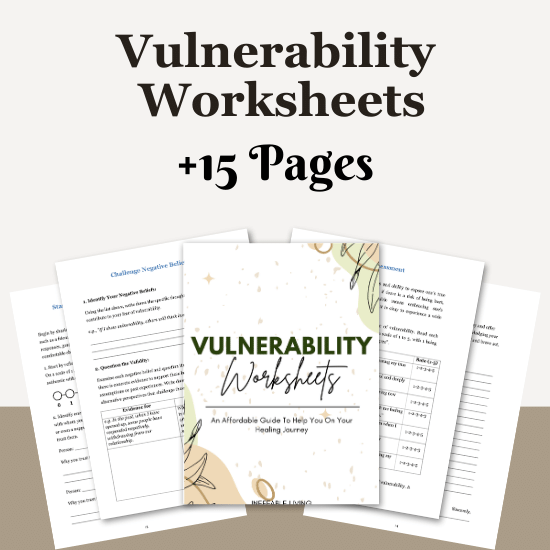
Find helpful resources for understanding and practicing vulnerability, including a quiz, books, blog posts, podcasts, and TED or TEDx Talks.
Quiz
Books


Blog Posts
- Shame and Intimacy: Why Vulnerability Feels So Dangerous
- How to Respond When Someone Is Being Vulnerable?
- Best 50 Vulnerable Questions To Ask Your Partner
Podcasts About Vulnerability
- Why We Have Vulnerability Hangovers — The Psychology of Your 20s
Click here
Focuses on the uncomfortable feeling that can appear after telling someone something personal: “Why did I say that?” It discusses shame, oversharing, people-pleasing, previous betrayals, fear of being seen, and learning how to distinguish healthy vulnerability from sharing more than you actually wanted to. - How to Be Yourself: Authenticity in Relationships — Being Well
Click here
Explores why people hide parts of themselves in relationships and how fear of rejection can create masks, roles, and people-pleasing. It also discusses vulnerability, authenticity, relationship needs, and allowing yourself to become more fully known. - Brené on FFTs — Unlocking Us
Click here
Brené Brown discusses the vulnerability involved in doing something for the first time and not knowing whether you will succeed. It is especially useful for perfectionists who avoid new experiences because they cannot tolerate looking inexperienced or uncertain. - Brené Brown With Judd Apatow on Vulnerability and Laughter — Unlocking Us
Click here
Explores vulnerability through humor, grief, storytelling, and human connection. It shows how talking honestly about uncomfortable experiences can make people feel less alone.
TED & TEDx Talks About Vulnerability
- The Power of Vulnerability — Brené Brown
Click here
The foundational TEDx talk on vulnerability and one of TED’s most watched talks. Brené Brown explains the relationship between vulnerability, shame, belonging, worthiness, love, and the fear that people will reject us if they see who we really are. - Listening to Shame — Brené Brown
Click here
A useful follow-up to The Power of Vulnerability. Brown focuses more closely on shame and explains why fear of being judged can make people hide, withdraw, attack, or avoid the very openness needed for meaningful connection. - Why Vulnerability Is a Human Thing — Dai Manuel
Click here
Explores the pressure to appear strong and self-sufficient and how that pressure can leave people without anyone they feel comfortable talking to about serious problems. It emphasizes that emotional openness is a human need rather than a weakness. - To Be Vulnerable Is Not to Be a Victim — Landa Mabenge & Sarah Isaacs
Click here
Explores vulnerability, shame, and surviving painful experiences. It challenges the idea that acknowledging hurt or speaking honestly about what happened makes someone powerless.
Healthy Vulnerability vs. Oversharing
Healthy vulnerability usually involves choosing a reasonably trustworthy person, sharing something because genuine connection or communication matters, keeping boundaries around what you are not ready to discuss, and allowing the other person to respond without demanding a particular reaction.
Oversharing is more likely when someone shares extremely personal information before enough trust exists, feels pressured to disclose, reveals something mainly to receive immediate reassurance, repeatedly ignores their own discomfort, or later realizes they shared information they genuinely wanted to keep private.
Becoming more vulnerable therefore does not mean removing all emotional protection. A healthier goal is learning to become selectively open: knowing what you feel, communicating it when appropriate, gradually testing whether another person is trustworthy, and allowing closeness to grow without abandoning your boundaries.