If setting boundaries makes you feel selfish, guilty, or “mean,” you’re not alone. Many people—especially those raised to prioritize harmony over honesty—internalize the idea that protecting their peace equals hurting others. But protecting your peace doesn’t make you unkind. It makes you clear. It’s not cruelty. It’s clarity. And it’s a vital act of self-respect.
What the Guilt Is Really About
When you start protecting your peace, especially in relationships where you were once always available, accommodating, or self-sacrificing, something unexpected shows up: guilt.
Not because you’ve done something wrong—
but because you’ve broken an emotional contract that once kept the relationship smooth.
The guilt you feel isn’t a sign that you’re mean.
It’s a sign that you were conditioned to believe that kindness = self-abandonment.
It’s the emotional residue of a lifetime of being rewarded for being agreeable, flexible, forgiving, and quiet.
Why Protecting Peace Feels “Selfish” at First
Many people were raised to be “good” by being small.
By being polite at all costs.
By never saying no.
By absorbing tension to protect others from discomfort.
So when you begin to center your own peace—by declining, distancing, or disengaging—you’re not just doing something new. You’re violating an internalized script that told you your worth was tied to how easy you were to access.
And that script doesn’t go quietly.
Related: Are You an Emotional Sponge? (5 Tips for Better Boundaries)
The Emotional Inheritance Behind the Guilt
Feeling mean is often inherited.
From cultures that equate obedience with virtue.
From family systems where peace was manufactured through silence.
From dynamics where your role was to smooth things over, not shake things up.
So when you now choose your peace over someone else’s comfort, that inherited guilt whispers:
- “You’re making things harder.”
- “You’re not being loving.”
- “You should be able to handle more.”
- “You’re the reason they’re upset.”
But peace isn’t selfish.
It’s the boundary that stops you from living on edge just to make others feel at ease.
How to Stop Feeling Mean for Protecting Your Peace?
Here’s how to reframe that guilt and start honoring your peace without apology.
1. Recognize the Root of the Guilt
The guilt you feel isn’t because you’re doing something wrong—it’s because you’ve been taught that your needs should come last.
Ask yourself:
- “Who taught me that self-sacrifice is the only way to be good?”
- “What am I afraid will happen if I protect my energy?”
- “Whose approval do I fear losing when I honor myself?”
Understanding the source of your guilt helps you interrupt inherited patterns.
2. Reframe ‘Kindness’ as Inclusion—Not Overextension
Kindness doesn’t mean overgiving. It means showing up with honesty, care, and integrity.
Practice:
- “I’m being kind by not pretending I have more capacity than I do.”
- “Saying no with clarity is more respectful than saying yes with resentment.”
- “I’m including myself in the circle of people I treat with care.”
You don’t have to abandon yourself to prove you’re kind.
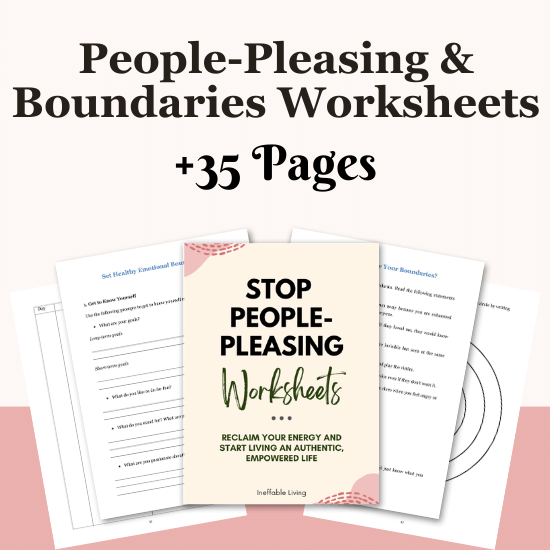
Related: Top 25 Tips On How To Set Boundaries Without Being Controlling? (+FREE Worksheets PDF)
3. Remember: Peace Is Not a Luxury—It’s a Necessity
Peace isn’t indulgence. It’s emotional oxygen. Without it, your nervous system, relationships, and health suffer.
Ask yourself:
- “What happens to me when I don’t protect my peace?”
- “How do I show up in relationships when I’m burnt out, bitter, or stretched too thin?”
Self-neglect doesn’t create more love—it creates more resentment. Peace makes connection sustainable.
4. Validate Yourself Without External Permission
You may not get applause for your boundaries. Some people may push back, guilt-trip, or pull away. That doesn’t make your boundary wrong.
Practice affirmations like:
- “I’m allowed to rest, protect, and prioritize my wellbeing.”
- “Just because someone doesn’t like my boundary doesn’t mean it’s wrong.”
- “Their discomfort is not my responsibility to fix.”
You can be misunderstood and still be aligned.
Related: How to Identify and Set Non Negotiable Boundaries?
5. Detach Your Worth From Being Needed
If your identity is tied to being the helper, fixer, or emotional caretaker, setting boundaries might feel like rejection. But you’re allowed to exist outside of service.
Ask yourself:
- “Who am I when I’m not solving someone else’s problem?”
- “Can I still feel worthy when I say ‘I can’t’ or ‘Not today’?”
- “What kind of peace am I missing by constantly earning love through usefulness?”
You are not only valuable when you’re selfless. You are valuable when you’re whole.
6. Let Go of the Role of the “Nice One”
Being “nice” often comes at the cost of being real. But peace grows when authenticity replaces performance.
Practice:
- Speaking up even when your voice shakes
- Choosing honesty over pleasing
- Trusting that people who value the real you will stay
You don’t need to be the agreeable one to be lovable. You need to be you.
7. Notice the People Who Benefit From Your Lack of Boundaries
The ones who call you mean for protecting your peace are often the ones who were benefiting from your silence or self-neglect.
Ask yourself:
- “Who gets uncomfortable when I protect my peace—and why?”
- “What does it say about the relationship if my well-being threatens it?”
- “Is the cost of keeping them happy worth the loss of myself?”
Sometimes the guilt is a signal that you’re finally breaking a pattern that’s been harming you.
Related: How to Set Boundaries with Yourself?
8. Practice Holding Boundaries Without Apologizing
You don’t have to defend your rest, your limits, or your energy. You simply need to name them—with calm clarity.
Practice phrases like:
- “That doesn’t work for me.”
- “I’m not available for that right now.”
- “I need space to regroup, and I’ll reach out when I’m ready.”
You can be clear without being cold. Firmness is not cruelty.
9. Recognize the Strength It Takes to Say ‘No’
Protecting your peace takes more courage than people-pleasing ever will. You’re not being mean—you’re finally being responsible for your own well-being.
Affirm to yourself:
- “I don’t need to break myself to keep others comfortable.”
- “This is what healing looks like—awkward, brave, and worth it.”
- “I’m allowed to create a life that feels good to live in.”
Peace is not selfish. It’s sacred.
Related: Top 19 Journal Prompts For Boundaries
Conclusion
You’re not mean for protecting your peace—you’re becoming fluent in self-honoring. Guilt will show up. So will fear. But neither of them gets to decide your worth. You are allowed to take up space, to rest, to need, to say no. And the more you practice it, the more you’ll realize: peace doesn’t make you hard—it makes you whole.