Relapse cycles can leave you feeling unreliable, ashamed, and disconnected from the part of you that wants a different life. After enough broken promises to yourself, it’s easy to believe you cannot trust your own word. But self-trust is not an all-or-nothing trait. It is a relationship — and like any damaged relationship, it can be rebuilt slowly, gently, and consistently. Rebuilding self-trust means learning to believe your actions more than your intentions, your patterns more than your hopes, and your small steps more than your past setbacks.
What Relapse Really Does to Your Sense of Self
Relapse doesn’t just interrupt progress. It erodes identity. Every time you return to a behavior you promised yourself you’d stop, a quiet fracture forms inside you. You start to believe you cannot rely on your own word, your own intentions, or your own strength. Over time, the relapse becomes less painful than the self-betrayal that follows it.
Why Self-Trust Breaks Down So Deeply
Years of relapse cycles create a pattern where:
Your promises feel temporary
Your goals feel fragile
Your confidence feels conditional
Your intentions lose emotional weight
Your inner voice becomes skeptical of you
Self-doubt becomes a default setting. You don’t just question your choices — you question your capacity to ever change.
How to Rebuild Self-Trust After Years of Relapse Cycles?
1. Acknowledge That Relapse Comes From Coping, Not Weakness
Years of relapse can make you believe you’re flawed or incapable, but relapse usually reflects unmet needs, emotional overwhelm, or lack of tools. Seeing relapse as a coping attempt — not a character defect — removes shame and makes room for growth.
2. Separate Your Identity From Your Behavior
You are not your relapses. You are a person trying to navigate pain with the skills you have. Creating this separation prevents you from building your identity around failure and makes rebuilding self-trust possible.
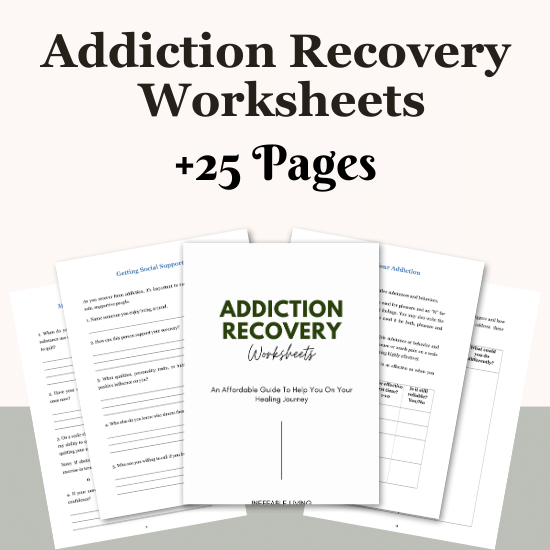
Related: Struggling with Addiction? These Worksheets Will Support Every Step of Recovery
3. Let Go of the Need for a Perfect Restart
Perfection kills self-trust because it sets you up to fail. When the only acceptable outcome is “never relapse again,” the pressure becomes unbearable. Self-trust grows through realistic expectations, not impossible ones.
4. Start With Promises You Can Actually Keep
Instead of grand commitments, make small, manageable promises — five minutes of movement, two minutes of breathing, one distractor task, one pause. Keeping tiny promises rebuilds internal credibility step by step.
5. Notice the Moments You Follow Through
Your mind is trained to focus on the relapses, not the efforts. Start tracking the times you resisted, paused, redirected, or reflected. Evidence of strength is often present — it’s just overlooked.
6. Stop Punishing Yourself After a Relapse
Harsh self-talk destroys self-trust by proving to your brain that you are unsafe with yourself. Compassion is not indulgence — it is the foundation for change. Without it, self-trust cannot grow.
7. Understand Your Relapse Triggers Clearly
Self-trust strengthens when you understand your patterns. Knowing what sets off urges, what time of day you struggle most, or what emotions push you toward relapse gives you predictability — and predictability creates stability.
8. Separate Urges From Decisions
Feeling an urge does not mean you’ve “failed again.” Urges are moments; decisions are actions. Rebuilding self-trust means acknowledging the difference so you stop interpreting every difficult moment as a collapse.
Related: How to Break the Addiction Cycle? [Definitive Guide]
9. Create a New Definition of Success
Instead of “I didn’t relapse,” define success as “I paused,” “I noticed,” “I interrupted the urge,” “I reached out,” or “I tried again.” This creates a path where progress is visible instead of invisible.
10. Build Routines That Support Your Future Self
Self-trust grows when your daily life supports your goals. Structure, rest, boundaries, and healthier coping methods reduce the emotional chaos that drives relapse.
11. Repair the Moments When You Break Your Word
When you do break a promise to yourself, instead of abandoning your goals, repair the rupture: acknowledge what happened, adjust the plan, and recommit. Repairing teaches your brain that setbacks do not equal abandonment.
12. Notice the Hidden Progress Between Relapses
Your relapses might be shorter, less intense, less frequent, or followed by faster recovery. These changes show improvement even when the pattern hasn’t fully broken yet. Recognizing this keeps motivation alive.
13. Stop Measuring Yourself Against People Who Haven’t Lived Your Story
Your journey is shaped by your experiences, traumas, circumstances, and nervous system patterns. Comparing yourself to people with different histories destroys self-trust. Your progress must be measured against your own past, not someone else’s present.
Related: How to Enjoy Being Sober? (+FREE Worksheets)
14. Build a Relationship With Yourself That Isn’t Conditional
Many people treat themselves kindly only when they’re doing well. But conditional self-worth collapses during relapse. Self-trust grows when your self-respect doesn’t disappear during setbacks.
15. Strengthen the Voice That Wants Healing
Relapse cycles often amplify the hopeless voice and silence the hopeful one. Start giving more attention to the part of you that wants healing — write from that voice, speak from that voice, make choices from that voice.
16. Create Internal Boundaries Without Harshness
Boundaries might mean limiting access to triggers, shortening alone time, or removing certain apps. These are not punishments — they are forms of protection. Protection builds trust.
17. Recognize the Emotional Honesty in Relapse Patterns
Relapse often reveals where you’re overwhelmed, lonely, stressed, or unsupported. Instead of hiding those emotional truths, use them as data to understand what you truly need.
18. Practice Choosing Even When You Don’t Feel Motivated
Motivation will not always be there. Consistency grows when you act from commitment rather than emotion. The more you show yourself you can choose action without relying on motivation, the more trust you build.
19. See Each Day as a Fresh Agreement With Yourself
Self-trust is not rebuilt through dramatic declarations — it is rebuilt through daily agreements: “Today, I will try.” Every day is a chance to strengthen the relationship between who you want to be and what you choose to do.
Related: How Childhood Trauma Leads to Addiction: Top 9 Causes
Conclusion
Rebuilding self-trust after years of relapse cycles is a gradual, compassionate process. You don’t need to erase your past — you need to show yourself that your future can be different. Self-trust returns slowly, through small choices, consistent effort, and the belief that you are worthy of starting again. Every moment you try is a moment you strengthen the part of you that refuses to give up.