When you’ve struggled with addiction for a long time, the label “addict” can begin to feel like your entire personality. It becomes woven into how you see yourself, how you explain your past, how you anticipate your future, and how you interpret your choices. But healing requires separating who you are from what you experienced. Detaching from the “addict identity” does not mean pretending the problem never existed or minimizing its impact. It means reclaiming your full humanity so recovery isn’t built on shame, limitation, or a single storyline.
What the “Addict Identity” Really Is
The “addict identity” is not just a label. It is a psychological lens shaped by years of struggle, relapse cycles, shame, and survival. It becomes a way of interpreting your choices, your limits, your worth, and your future. Eventually, you stop seeing addiction as something you experience and start seeing it as who you are. The identity becomes heavier than the behavior itself.
How the Identity Forms Over Time
This identity builds slowly through:
Repeated attempts to quit
The exhaustion of relapse
Internalized shame from others
Medical or therapeutic labels used rigidly
Years of feeling “different” or “broken”
A belief that your struggle defines your character
Because addiction impacts behavior so visibly, the mind begins to weave those patterns into the story of your selfhood.
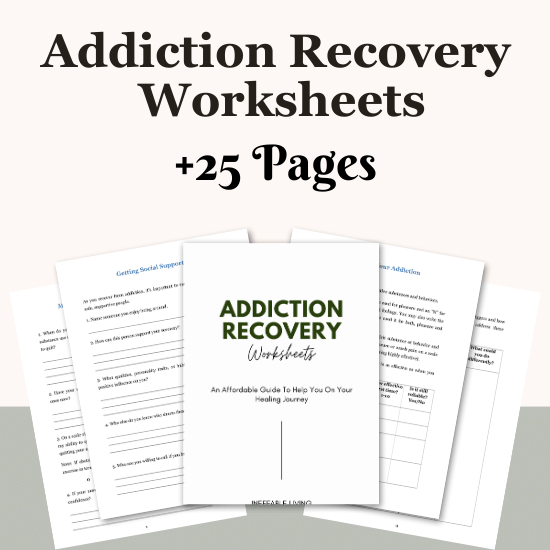
Related: Struggling with Addiction? These Worksheets Will Support Every Step of Recovery
How to Detach From the “Addict Identity” Without Denial?
1. Acknowledge Your History Without Making It Your Definition
Your past matters, but it is not the sum total of your identity. You can acknowledge what you lived through without allowing it to speak for every part of your life. Naming the truth is not the same as becoming it.
2. Notice When You Use the Label to Explain Everything
If you catch yourself thinking, “I did that because I’m an addict,” pause. Addiction may have shaped behaviors, but it did not erase your individuality. Overusing the label prevents you from seeing yourself as a complex person capable of change.
3. Stop Using the Identity as a Prediction of Failure
Many people internalize the idea that “once an addict, always an addict,” which becomes a self-fulfilling belief. Detaching from the identity means challenging the idea that your past determines your future with absolute certainty.
4. Recognize the Difference Between Humility and Self-Erasure
Owning your struggles is humility. Believing you are only your struggles is self-erasure. Keeping this distinction clear protects you from shrinking your identity to one chapter of your story.
5. Avoid Turning the Label Into a Personal Limitation
If the identity makes you feel permanently broken or incapable, it is holding you back. Labels are tools, not prisons. When they stop serving your growth, they need to be re-evaluated.
6. Notice When Shame Is Disguised as “Honesty”
Saying “I’m just an addict” can feel like being honest, but often it’s shame speaking. Shame wants you to believe that the worst moments define your entire character. Real honesty allows space for your strengths and potential too.
Related: How to Break the Addiction Cycle? [Definitive Guide]
7. Reframe Your Story as Survival Rather Than Failure
You didn’t struggle because you’re weak—you struggled because you were trying to cope with pain, circumstances, or emotional overwhelm the best way you knew at the time. Seeing your past as survival reduces the emotional weight of the label.
8. Stop Centering the Identity in Every Introduction or Explanation
If addiction becomes your default reference point in conversations, ask yourself what you fear would happen if you didn’t lead with it. Often, it’s a fear of being misunderstood or judged. Allowing other parts of your identity forward makes room for expansion.
9. Define Yourself by Your Values, Not Your History
Your values—kindness, responsibility, honesty, growth—are far more accurate indicators of who you are than any struggle. Rebuilding identity around values shifts your self-view from deficit to direction.
10. Notice When You Use the Label as Protection
Sometimes people cling to the identity as a shield against expectations. “If I’m an addict, no one can expect too much from me.” This shield keeps you safe from disappointment but limits your growth. You deserve a life that is bigger than your fear of failing.
Related: How to Enjoy Being Sober? (+FREE Worksheets)
11. Celebrate New Behaviors as Evidence of Identity Shifts
Every small decision—pausing before acting, reaching out for support, choosing healthier coping—proves you are more than your past. These actions help anchor a new identity rooted in healing, not harm.
12. Avoid Minimizing Your Progress to Fit the Old Identity
If you downplay your improvements, it may be because your old story feels more familiar than your new one. Letting yourself acknowledge real change helps detach you from outdated self-perceptions.
13. Build Relationships That Don’t Revolve Around Your Past
Connections that only see you as your struggle keep the identity alive. Seek relationships where your present-day choices matter more than your history.
14. Recognize That Growth Does Not Require Constant Self-Punishment
You don’t need to continually remind yourself of your past to stay committed to healing. Punishment does not produce transformation—consistent, aligned choices do.
15. Allow Yourself to Say, “I Used to Struggle With…”
This language honors your truth without anchoring you in it. It acknowledges the past while giving your identity permission to evolve.
Related: How Childhood Trauma Leads to Addiction: Top 9 Causes
16. Let Yourself Outgrow the Version of You That Survived
The identity that once helped you make sense of your life may no longer match the person you’re becoming. Outgrowing a survival identity is not denial—it is development.
17. Notice When You Fear Life Without the Label
Letting go of the identity can feel disorienting. If addiction shaped your routines, emotions, relationships, and choices for years, releasing the label can feel like losing structure. This discomfort is part of growth, not a sign to cling tighter.
18. Practice Seeing Yourself Through the Lens of Capability
Instead of asking, “Can I stay sober?” try asking, “What am I capable of today?” Capability expands identity; fear contracts it.
19. Build a Life That Is Too Full to Be Defined by One Chapter
Fill your world with new habits, interests, responsibilities, and connections. When your life expands, your identity naturally expands with it.
Related: Best 7 Emotional Sobriety Books
Conclusion
Detaching from the “addict identity” is about reclaiming the full truth of who you are. You are not erasing the past; you are refusing to let it reduce you. You are more than what you struggled with, more than the moments that hurt you, and more than a label meant to describe one chapter of your life. You are allowed to become someone new — without pretending the old you never existed.