Find helpful resources for understanding and overcoming avoidance, including books, blog posts, podcast episodes, and TED or TEDx Talks about avoidance and procrastination.
Table of Contents
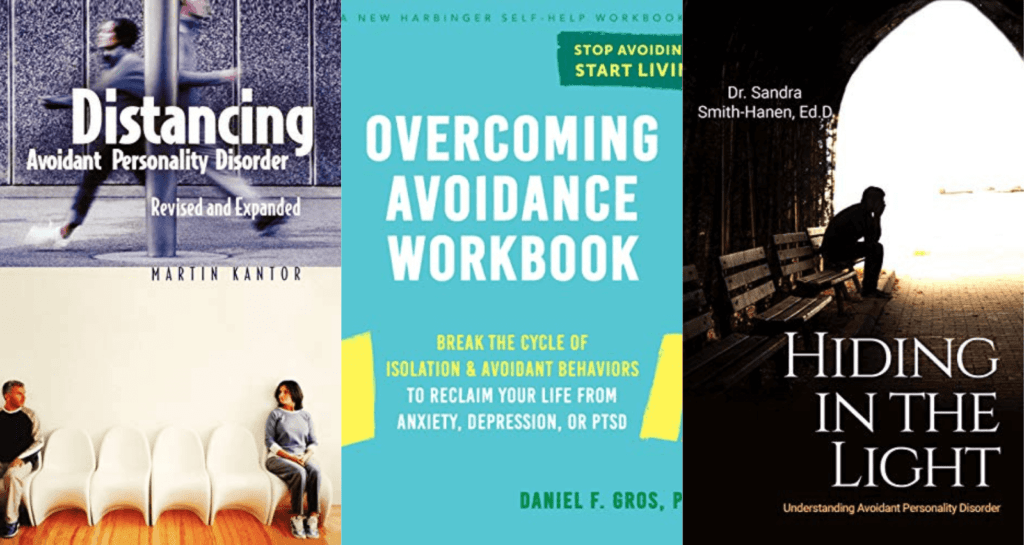
Books


Blog Posts
- How to Spot the Avoidance Cycle in Everyday Life?
- How to Support a Loved One Who Struggles With Avoidance?
- How Avoidance Fuels Anxiety (and What to Do Instead)?
- Best 9 Tips On How To Stop Avoidance Cycle
- How to Take the First Step Out of Hikikomori?
- 14 Ways to Stop Avoiding Difficult Conversations
- 9 Tiny Steps to Start Facing What You’ve Been Avoiding
- How to Take Action Even When You Don’t Feel Ready?
- “I Don’t Feel Like Doing Anything”—Now What?
Avoidance Podcast Episodes
- Anxiety and Avoidance Explained — The Anxious Truth
Click here
Explains that avoidance includes more than staying away from places. Reassurance-seeking, checking, compulsively arguing with thoughts, safety behaviors, escaping, and repeatedly trying to eliminate discomfort can all become forms of avoidance. - Anxiety and Avoidance: How Can I Tell If I’m Avoiding? — The Anxious Truth
Click here
Helps distinguish sensible choices from anxiety-driven avoidance. It looks at motivation, urgency, fear, and the difference between obvious avoidance and smaller behaviors that quietly maintain anxiety. - Anxiety Recovery and Why Avoiding Panic Triggers Isn’t a Good Plan — The Anxious Truth
Click here
Explains why repeatedly avoiding panic triggers can make them feel more threatening over time. It discusses gradually moving toward feared experiences rather than continually creating a life designed to prevent anxiety. - Anxiety, OCD and the Cost of Negotiated Avoidance — The Anxious Truth
Click here
Examines how small avoidance decisions accumulate. One skipped activity or extra safety behavior may seem unimportant, but repeatedly making life decisions around fear can gradually make life much smaller. - Anxiety, Distraction, and “Running From Feelings” — Disordered
Click here
Explores the difference between healthy distraction and using distraction to repeatedly escape emotions. It is useful for identifying when staying busy has become another way of avoiding uncomfortable experiences. - How We Got Better — Disordered
Click here
The hosts describe their own anxiety recovery and discuss reducing avoidance, tolerating uncomfortable experiences, and learning through action that anxiety can be handled. - Anxiety and the Death of Curiosity — Disordered
Click here
Looks at how anxiety can cause someone to approach every situation by asking, “How will this make me feel?” instead of remaining open to what might happen. It discusses rebuilding curiosity and trying experiences that anxiety has discouraged. - Experiential Avoidance: The Hidden Way We Play-It-Safe — PLAYING-IT-SAFE
Click here
Explains experiential avoidance: avoiding situations because of the emotions, thoughts, or sensations they might create. It connects this pattern with procrastination, overthinking, perfectionism, and people-pleasing. - Understanding Procrastination: The Psychological Processes Behind It — PLAYING-IT-SAFE
Click here
Explains why procrastination is often less about laziness and more about avoiding uncomfortable emotional experiences connected with a task. It also provides questions for identifying what is actually driving the delay.
TED & TEDx Talks About Avoidance & Procrastination
- Why You Procrastinate Even When It Feels Bad — TED-Ed
Click here
Explains procrastination as more than poor time management. Difficult tasks can trigger uncomfortable emotions such as fear, insecurity, boredom, frustration, or self-doubt, leading someone to choose immediate relief instead of beginning the task. - The Real Reason You Procrastinate — Adam Grant
Click here
Challenges the idea that procrastination simply means laziness. It examines why people delay meaningful work and offers practical ways to reduce unnecessary postponement. - Ways to Avoid Procrastination — Andrew Bouchard
Click here
A straightforward talk about getting out of the procrastination cycle. It is particularly useful when avoidance takes the form of continually delaying schoolwork, responsibilities, or personal goals. - Your Fear Hides a World Full of Possibility — Eric Sheen
Click here
Focuses on fear of failure, anxiety, procrastination, and the tendency to avoid action because the possible outcome feels uncomfortable. The talk emphasizes taking action despite fear instead of waiting for fear to disappear first.