How you see your body touches every part of your life. It influences how you speak to yourself, how you show up around others, and even how willing you are to take opportunities. A poor body image can quietly drain joy and self-esteem, making you feel like your worth depends only on appearance. Shifting this narrative doesn’t happen overnight, but daily habits can build a gentler, more respectful relationship with yourself. The goal isn’t to force yourself to love every detail of how you look, but to practice consistency in kindness and care so that over time, you stop treating your body as an enemy and start treating it as a companion.
The Roots of Body Image
Body image is less about how your body looks and more about how your mind interprets it. From childhood, messages from family, media, and peers shape how you see yourself. Praise tied only to appearance can plant the belief that worth depends on how closely you fit beauty ideals. Criticism, teasing, or comparison leave imprints that resurface every time you look in the mirror.
Your body image is not fixed—it’s a narrative that can be rewritten. But rewriting takes daily reinforcement, because the negative stories have been repeated for years.
Why Body Image Feels So Hard to Change
Body image struggles persist because they are entangled with deeper emotions:
- A longing for acceptance
- A fear of rejection
- A desire for control when life feels uncertain
- Old wounds of shame or ridicule
Every glance in the mirror becomes more than a reflection—it becomes a test of worth. This is why small shifts in daily patterns matter. They gently retrain the brain to separate identity from appearance.
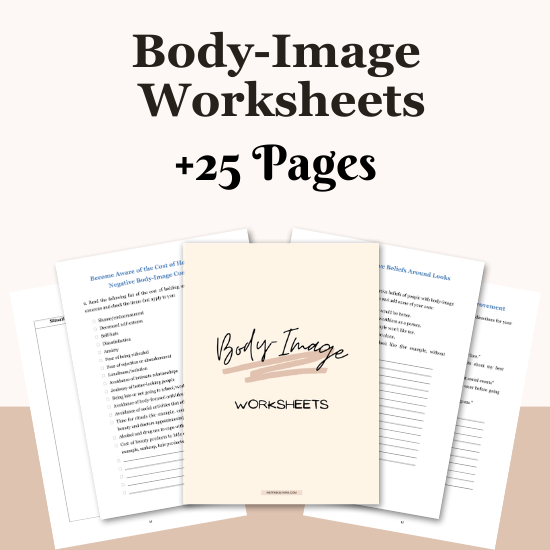
Related: Struggling with Body Image? These Worksheets Support Healing and Self-Acceptance
Subtle Ways Body Image Shows Up
Struggles with body image don’t always look like dieting or mirror-checking. They can surface in quieter ways:
- Declining social events because of how clothes fit
- Comparing yourself to strangers online
- Feeling guilty after eating certain foods
- Avoiding intimacy because of body shame
- Judging your body in old photos instead of cherishing the memory
- Thinking “I’ll be happy when I lose weight”
These habits are not about vanity—they’re about trying to soothe a deeper discomfort.
The Emotional Cost of Negative Body Image
Living with body dissatisfaction is exhausting. It drains mental energy, fuels anxiety, and feeds self-criticism. It can also create distance in relationships—friends may notice you withdrawing, partners may feel the wall of self-consciousness, children may observe you modeling self-criticism.
The cost isn’t just internal—it ripples outward. And over time, the constant preoccupation with appearance can leave little room for joy.
Related: How To Break Emotional Eating? Top 8 Powerful Ways To Stop Comfort Eating
10 Daily Habits to Improve Your Body Image
1. Begin the Day With Neutral or Kind Self-Talk
Many people begin their day criticizing their reflection or obsessing over weight or shape. This creates an instant emotional burden. Instead, start with neutral acknowledgment or kindness. Look in the mirror and say, “This is my body today, and I can move forward with it.” Over time, this trains your mind to detach worth from appearance and lowers the pressure to look “perfect” in the morning.
2. Choose Clothing That Supports Confidence
Clothes that pinch, ride up, or make you self-conscious amplify body shame throughout the day. Make it a habit to wear clothes that feel comfortable, breathable, and reflective of your personal style. When your body feels at ease, you’re less distracted by insecurity and more present in your daily activities.
3. Reduce Constant Body Checking
Checking the mirror, pinching your stomach, or weighing yourself repeatedly reinforces a hyper-focus on flaws. Daily commitment to reducing body checking can shift your energy back to living instead of monitoring. Notice when the urge comes, and instead of obeying it, redirect your attention to something grounding — like your breath or what you’re working on.
4. Reframe How You See Your Body
Every day, try to shift from appearance-based judgment to function-based appreciation. Instead of saying, “I hate how my arms look,” reframe it to, “These arms allow me to cook, carry, and hug the people I love.” When practiced regularly, this reframing teaches you to value your body as an instrument rather than an ornament.
Related: How to Stop Emotional Eating?
5. Practice One Gratitude Statement Daily
Gratitude is powerful in reshaping body image. Each day, pick one body part and thank it for what it does. “I’m grateful for my legs because they carried me on a walk today.” “I’m grateful for my lungs because they give me breath when I laugh.” Gratitude moves focus from imagined inadequacies to quiet appreciation.
6. Curate Your Media Input
The images and voices you consume daily shape your subconscious beliefs. If your feed is filled with unrealistic beauty ideals, body comparison becomes unavoidable. Make it a daily habit to unfollow accounts that feed insecurity and replace them with diverse, body-neutral or body-positive voices. Seeing unfiltered, varied bodies helps normalize your own.
7. Nourish Without Judgment
Food is often tangled with guilt, rules, or punishment. A daily shift is to eat with balance and awareness instead of labeling meals as “good” or “bad.” Allow yourself to notice satisfaction, fullness, and enjoyment. Approaching food neutrally builds trust between you and your body, replacing guilt with respect.
8. Move Your Body for Joy, Not Punishment
Movement should not be a form of repayment for eating. Each day, try to engage in movement that feels enjoyable and grounding. It could be stretching in the morning, dancing while cooking, taking a slow walk, or doing a workout you actually like. Associating movement with energy and joy instead of shame transforms your relationship with your body’s abilities.
Related: What Is A Distorted Self Image & How To Build A Positive One?
9. Practice Mindful Awareness of Triggers
Throughout the day, notice when negative thoughts about your body spike. Is it after scrolling online? Trying on clothes? Sitting in a meeting? Becoming aware of triggers helps you prepare gentle coping strategies. For instance, if the fitting room is difficult, take a supportive friend, or if social media triggers comparison, limit time before bed.
10. End the Day With a Kind Reflection
Body image work isn’t only about mornings; it’s also about how you close your day. Before bed, pause and reflect: “How did I treat myself today?” End with one phrase of kindness: “My body carried me through another day. It deserves rest.” This closes the day with care rather than criticism and leaves your subconscious with a more compassionate imprint before sleep.
Related: Top 21 Body Image Journal Prompts (+FREE Worksheets)
Conclusion
Improving body image is less about big transformations and more about quiet, repeated habits that reshape how you relate to yourself. When you begin and end your day with self-kindness, wear clothes that make you comfortable, focus on what your body does rather than how it looks, and filter out toxic messages, you begin to see your body not as a problem to fix but as a life-long partner to care for.