Even people who’ve done years of self-acceptance work still have days when body image feels heavy. A bad body image day doesn’t erase progress — it simply means you’re human. The goal isn’t to avoid these days completely, but to move through them without letting them pull you into shame, restriction, or self-punishment.
Why Bad Body Image Days Happen
Even with progress, there will be days when old insecurities resurface. A glance in the mirror, a photo you weren’t ready for, clothes that don’t fit the way you hoped—these moments can awaken old narratives of not being enough. Bad body image days don’t mean failure; they mean you are human, living in a culture that constantly reminds you of impossible standards.
The Cycle of Spiraling
What makes a bad body image day overwhelming isn’t the thought itself but the spiral that follows. One critical thought multiplies into a flood: I look terrible. I’ll never change. Everyone is judging me. The spiral turns a passing discomfort into a full emotional storm.
Spiraling also creates secondary pain—you not only feel bad about your body but also feel guilty for feeling this way at all. The shame compounds, pulling you deeper into self-criticism.
What You’re Really Feeling
Often, body dissatisfaction is a mask for something deeper:
- Stress that feels out of control
- Loneliness disguised as comparison
- Fear of rejection expressed as body shame
- Old echoes of bullying or critical voices
When you recognize the emotion beneath the body-focused thought, the intensity softens. It’s rarely just about the body.
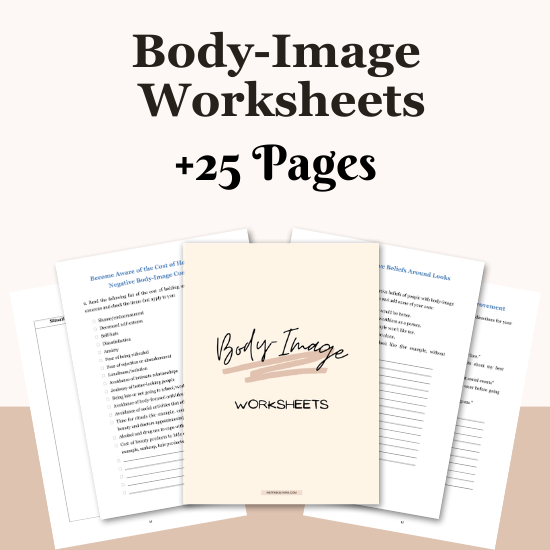
Related: Struggling with Body Image? These Worksheets Support Healing and Self-Acceptance
How to Handle Bad Body Image Days Without Spiraling?
1. Name It Clearly
Say to yourself: “This is a bad body image day.” Naming it gives the struggle boundaries. Instead of “I hate myself” or “I’ll always feel like this,” you reframe it as temporary. Awareness is the first step to preventing a spiral.
2. Choose Comfort Over Criticism
Put on clothes that feel loose, soft, and non-restrictive. This isn’t “giving up” — it’s protecting your energy. Forcing yourself into something tight or “flattering” only heightens discomfort. Comfort becomes a small but powerful act of self-care.
3. Reduce Mirror and Scale Time
Spiraling often comes from repeated checking. Commit to reducing how often you look in mirrors or step on the scale on bad days. If needed, cover mirrors temporarily or put the scale out of sight. Creating distance reduces the chance of self-attack.
4. Anchor in Body Function
Write down three things your body allows you to do today: walking, cooking, hugging, laughing, breathing deeply. Shifting from “How do I look?” to “What can I do?” reclaims gratitude and keeps perspective.
Related: How To Break Emotional Eating? Top 8 Powerful Ways To Stop Comfort Eating
5. Practice Grounding Exercises
Bad body image days can trigger anxiety. Use grounding techniques such as the 5–4–3–2–1 method (five things you see, four things you touch, three you hear, two you smell, one you taste) to interrupt obsessive thoughts.
6. Curate Your Environment
Unfollow social media accounts that trigger comparison. Replace them with accounts showing body diversity and body neutrality. Offline, limit conversations that center only on dieting, weight, or looks. Protecting your inputs protects your mindset.
7. Eat With Gentle Nourishment
Instead of punishing yourself with restriction or bingeing, focus on balanced meals that give you energy. On a hard day, even telling yourself, “My body deserves fuel even if I don’t love it right now” is a step toward respect.
Related: How to Stop Emotional Eating?
8. Move for Mood, Not Punishment
If movement helps, choose forms that feel good (a walk, dancing, stretching) instead of punishing workouts aimed at “fixing” your body. Remind yourself: exercise is about feeling alive, not shrinking yourself.
9. Use “Friend Talk” Instead of “Mirror Talk”
When self-criticism arises, pause and ask: “Would I say this to my best friend?” Replace the harsh thought with something you’d say to them: supportive, understanding, compassionate.
10. Step Into Life Beyond Appearance
Do something that reminds you of your identity beyond looks — work on a project, call a friend, read, pray, write, paint. Investing attention in meaning-rich areas reminds you that appearance is not the sum of who you are.
11. Limit Isolation
Spirals grow stronger in silence. Text a trusted friend, even just to say, “I’m having a rough body day.” Naming it aloud takes away some of its power and invites support instead of secrecy.
Related: What Is A Distorted Self Image & How To Build A Positive One?
12. Journal the Experience
Write down your thoughts without censoring them. Then, gently challenge the harsh ones. Example: “I feel gross today” → “Feeling gross is not the same as being gross. This is an emotion, not a fact.” Writing creates distance from destructive thoughts.
13. Avoid Big Decisions About Your Body
Don’t start new diets, book cosmetic procedures, or buy extreme workout plans on bad days. Choices made from shame rarely serve you long term. Tell yourself: “I don’t make permanent choices on temporary feelings.”
14. Create a “Bad Body Image Day” Toolkit
Prepare in advance: a playlist that lifts your mood, affirmations written down, a cozy outfit, a safe snack, or grounding exercises. Having these ready means you don’t have to think when your mind is loudest.
15. End the Day With Neutrality, Not Perfection
You don’t need to flip into full body love by bedtime. The goal is neutrality — “My body is here, and I can live with it today.” Ending with neutrality keeps you steady and prevents shame from spilling into the next day.
Related: Top 21 Body Image Journal Prompts (+FREE Worksheets)
The Deeper Purpose of Handling These Days
The goal isn’t to eliminate bad body image days. It’s to prevent them from dictating your worth or actions. When you learn to ride the wave without spiraling, you build resilience. Each time you move through one of these days with gentleness, you create new evidence: “Even when I struggle, I can still treat myself with care.”
Conclusion
Bad body image days don’t have to unravel you. They can be managed with compassion, structure, and practical choices that prevent shame from taking over. By naming the day, protecting your environment, focusing on function, nourishing yourself, and leaning into neutrality, you give yourself proof that you can weather body image storms without spiraling. Confidence doesn’t come from never struggling — it comes from learning how to meet the struggle with steadiness.