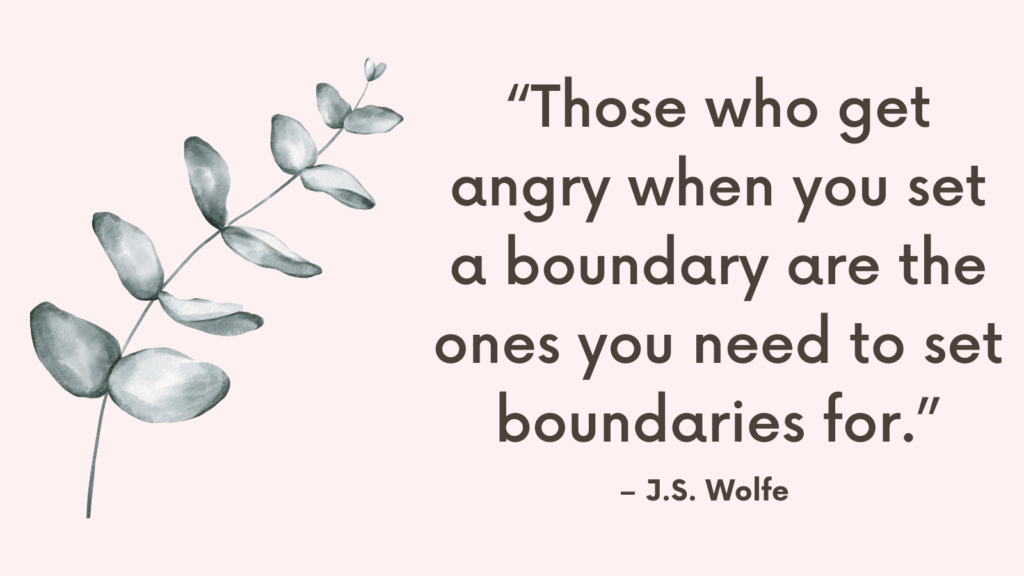
Setting a boundary is one step. Holding that boundary—especially when someone resists, guilts you, or tries to override it—is where the real emotional work begins. Many people don’t like when you change the rules, especially if they benefited from your lack of boundaries before. But your job is not to convince them your boundary is valid. Your job is to honor it anyway.
What Makes Boundary Pushback So Emotionally Charged?
When you set a boundary, you’re not just making a request.
You’re disrupting an unspoken agreement.
That agreement might have been:
- You always say yes
- You don’t make others uncomfortable
- You manage their feelings
- You overextend without complaint
So when you change the rules—especially for the sake of your well-being—others may feel betrayed, confused, or defensive. But the pushback isn’t always about you. It’s often about their discomfort with your self-protection.
Related: Are You an Emotional Sponge? (5 Tips for Better Boundaries)
Why Holding the Boundary Feels So Hard
Holding a boundary activates old emotional scripts:
- “I’m being selfish”
- “They’ll leave me”
- “I have to explain myself better”
- “Maybe I was too harsh”
- “Peace isn’t worth this conflict”
It can trigger deep fears—of abandonment, guilt, conflict, or being misunderstood.
It’s not the pushback itself that makes us crumble.
It’s what it awakens inside us: the shame, the second-guessing, the grief of no longer being who we were in the relationship.
Why Some People Push Back
Pushback is often not a refusal to respect you. It’s a reaction to losing access to what your lack of boundaries used to give them.
- Comfort
- Control
- Emotional labor
- Unfiltered access to your time or energy
When people benefit from your self-abandonment, your self-protection will feel like rejection to them.
Related: Top 25 Tips On How To Set Boundaries Without Being Controlling? (+FREE Worksheets PDF)
How to Hold a Boundary When Someone Pushes Back?
Here’s how to hold firm when your limits are met with pushback.
1. Expect Discomfort—Not Harmony
It’s normal to feel anxious, guilty, or unsure when someone challenges your boundary. That doesn’t mean the boundary is wrong. It means you’re growing.
Remind yourself:
- “Discomfort isn’t danger—it’s part of change.”
- “I can tolerate temporary tension to protect my peace.”
- “Their reaction isn’t a reflection of my worth—it’s a reaction to my growth.”
Boundaries often feel worse before they feel better. Stay with the discomfort.
2. Stay Calm and Don’t Over-Explain
When someone challenges your boundary, they may try to debate, shame, or pressure you. The urge to over-explain or defend yourself is strong—but unnecessary.
Instead, stick to short, calm phrases like:
- “I understand that’s how you feel. My decision stands.”
- “I hear you. And this is still what I need.”
- “I’m not looking to debate this. I’ve made my choice.”
You don’t have to convince them. You only have to stand in your truth.
Related: How to Identify and Set Non Negotiable Boundaries?
3. Repeat Yourself Without Apologizing
When someone keeps pushing, your consistency is what reinforces the boundary—not your reasoning.
Use the broken-record technique:
- “As I said, I’m not available for that.”
- “Like I mentioned, I won’t be attending.”
- “I know you’re upset, and my boundary is still the same.”
Repetition is not rude—it’s reinforcement.
4. Watch for Manipulation Tactics
Pushback often comes in the form of guilt-tripping, gaslighting, silent treatment, or even love bombing.
Examples of manipulation:
- “You’ve changed.”
- “I guess you don’t care anymore.”
- “After all I’ve done for you…”
- “Fine. Do whatever you want.”
Respond internally with:
- “This discomfort is about them, not me.”
- “I don’t need to fix their feelings to keep my boundary.”
- “I can care about someone and still say no.”
Recognizing manipulation helps you stay grounded and less reactive.
Related: How to Set Boundaries with Yourself?
5. Anchor Into Your Why
Holding a boundary is easier when you remember why it matters.
Ask yourself:
- “What does this boundary protect in me?”
- “What pattern am I interrupting?”
- “Who do I become when I don’t hold this line?”
Your peace, healing, and self-trust are bigger than their approval.
6. Let Go of the Need for Approval
You don’t need others to like or agree with your boundary for it to be valid.
Repeat to yourself:
- “Respect is more important than approval.”
- “I don’t need them to understand—only to accept.”
- “I’m allowed to disappoint others in order to protect myself.”
Their disapproval may feel loud—but it’s not more important than your self-respect.
Related: Top 19 Journal Prompts For Boundaries
7. Decide the Consequence—and Follow Through
If someone continues to disrespect your boundary, clarity alone isn’t enough. You may need to take action.
Examples of follow-through:
- Limit contact or time spent
- Leave the conversation or space
- Block or mute on digital platforms
- End or redefine the relationship
Enforcing a boundary without consequence is like locking a door but leaving it open.
8. Get Support From People Who Respect You
Surround yourself with people who celebrate your growth—not those who resent it.
Support might look like:
- A friend who reminds you, “You don’t owe anyone access.”
- A therapist who helps you untangle guilt
- A journal space where you process your feelings safely
You don’t have to hold boundaries alone.
9. Practice Nervous System Regulation in the Moment
Boundary pushback can activate your fight, flight, or fawn responses. Learn to calm your body as you hold firm.
Try:
- Taking slow, steady breaths before replying
- Placing a hand on your chest or stomach for grounding
- Pausing before responding to regulate your tone and presence
Your nervous system deserves safety—even if others don’t offer it.
10. Celebrate Yourself for Holding the Line
Holding a boundary is an act of self-trust. Each time you reinforce it, you reclaim power from old patterns.
Affirm to yourself:
- “This is how I heal.”
- “This is how I show myself respect.”
- “This is how I change my story.”
Boundaries aren’t about control. They’re about freedom—the freedom to be who you are, safely, fully, and without apology.
Related: Top 10 Books About Setting Boundaries
Conclusion
When someone pushes back, remember: their resistance is not a reason to collapse your boundary—it’s a sign that the boundary was needed.
It’s not your job to keep everyone comfortable.
It’s your job to stay connected to your truth.
And the more you honor your boundaries, the more you teach the world how to honor you.