Emotional dumping happens when someone offloads their distress onto you without consent, awareness, or reciprocity. It can feel overwhelming, draining, and one-sided—especially if you’re empathic, conflict-avoidant, or used to being the listener. Setting boundaries doesn’t mean you’re rejecting them. It means you’re protecting your emotional bandwidth and choosing intentional connection over emotional flooding.
- The Hidden Cost of Always Being the Listener
- What Emotional Dumping Is (and What It Isn’t)
- Why It’s So Hard to Say “Enough”
- The Myth of the “Good Friend”
- How to Set Boundaries with Someone Who Emotionally Dumps on You?
- The Nervous System Knows
- What Loving Boundaries Sound Like
- You’re Allowed to Choose Mutuality
- Conclusion
The Hidden Cost of Always Being the Listener
There’s a certain kind of conversation that doesn’t feel like a conversation—it feels like a flood. Someone rushes in with intense emotions, venting non-stop, leaving no room for you to speak, breathe, or even exist in the interaction. It’s not mutual. It’s not respectful. It’s emotional dumping.
Over time, being the constant recipient of someone’s unprocessed emotional chaos can make you feel used, drained, invisible, and sometimes even resentful. But because you care—or because you were conditioned to always hold space—you may hesitate to call it out.
What Emotional Dumping Is (and What It Isn’t)
Emotional dumping is not the same as healthy emotional sharing. It lacks mutuality, consent, and attunement. It often comes in the form of one-sided venting that assumes access to your time and energy, without checking if you’re available—physically or emotionally.
It’s not vulnerability. It’s not intimacy. It’s a kind of unconscious emotional offloading that uses others as a dumping ground rather than a safe space.
Why It’s So Hard to Say “Enough”
If you were raised in an environment where other people’s feelings dominated the space—maybe a parent confided in you too much, or you were expected to manage adult emotions—you may have learned to see emotional dumping as normal. You became the container for other people’s pain, even when no one asked if you had the capacity.
So when it happens now, your body may register discomfort, but your mouth freezes. You listen anyway. You absorb anyway. You keep peace at the cost of your own regulation.
The Myth of the “Good Friend”
Many people believe that being a good friend means always being there. But that’s a myth rooted in codependency, not connection. Real friendship honors consent, mutual care, and energetic boundaries. You are not selfish for protecting your bandwidth. You are not cold for needing limits. You are not unkind for stepping away when someone won’t stop talking at you instead of to you.
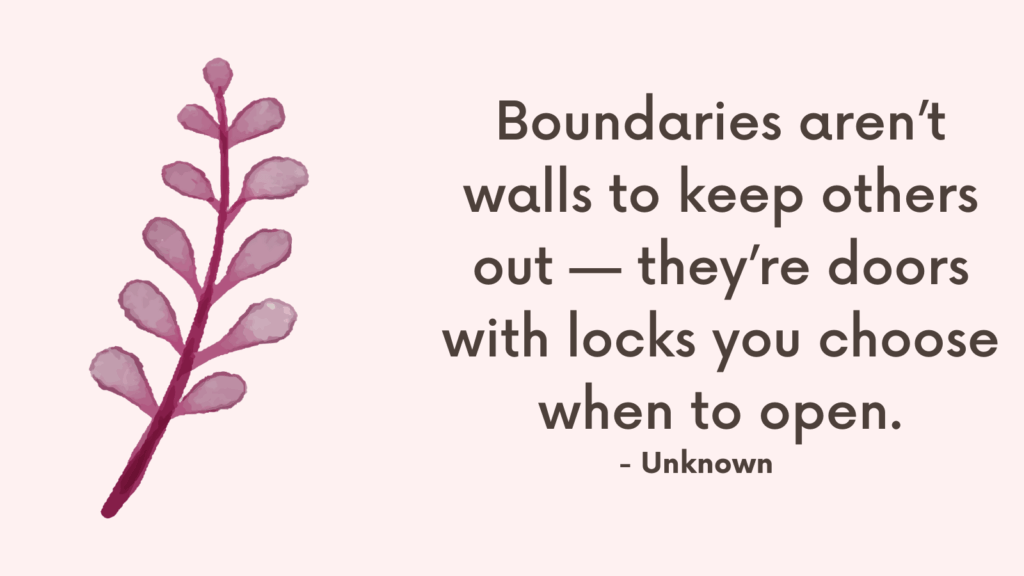
Boundaries aren’t a rejection of the other person. They’re a commitment to staying in connection without abandoning yourself.
Related: Top 25 Tips On How To Set Boundaries Without Being Controlling? (+FREE Worksheets PDF)
How to Set Boundaries with Someone Who Emotionally Dumps on You?
Here’s how to set boundaries when someone emotionally dumps on you—without guilt and with clarity.
1. Recognize the Difference Between Sharing and Dumping
Healthy emotional sharing involves consent, mutuality, and sensitivity to the other person’s capacity. Dumping, on the other hand, is unfiltered, often chaotic, and assumes you’ll absorb it all without limits.
Signs of emotional dumping include:
- Long, intense monologues without checking in
- Trauma-sharing without context or relationship
- Venting that repeats without change or reflection
- Ignoring your cues of overwhelm or disinterest
The first step is naming what’s happening. Not every conversation is healthy just because it’s “honest.”
2. Check in With Your Own Capacity Before Engaging
You don’t owe anyone access to your emotional energy at all times. Before listening, ask yourself:
- “Do I have the capacity to hold this right now?”
- “Am I feeling grounded or already depleted?”
- “Is this a relationship where I’m always the container?”
It’s okay to say no. Boundaries start with knowing where you end and they begin.
3. Interrupt With Compassionate Redirection
If someone begins dumping mid-conversation or unexpectedly, it’s okay to interrupt with care. You’re not being rude—you’re steering the moment into something more respectful.
You can say:
- “I want to support you, but I’m not in the right headspace to hold this right now.”
- “Can we pause for a moment and check in with what you’re needing from me?”
- “This sounds like a lot. Would it be okay if we talked about it another time?”
Interrupting creates a boundary and reminds both of you that your time and energy matter.
Related: How to Set Boundaries at Work?
4. Set Clear Guidelines for Emotional Conversations
If emotional dumping is a pattern, set boundaries before the next episode happens. Be direct, kind, and honest about what you can and can’t hold.
Try saying:
- “When we talk, I want both of us to feel heard. Can we check in before diving into heavy stuff?”
- “I’m happy to support you—but I also need space for my own processing sometimes.”
- “I value our connection, but I can’t be your only emotional outlet. Would you be open to other supports, too?”
Boundaries aren’t rejection—they’re structure for real connection to thrive.
5. Offer Alternatives Instead of Absorbing Everything
Sometimes the person dumping needs help—but not necessarily from you. Offer support that doesn’t involve self-sacrifice.
You might say:
- “That sounds like something a therapist could really help with—have you thought about talking to one?”
- “Would it help if I just listened for five minutes and then we take a breather?”
- “This feels really heavy—what do you need right now: advice, distraction, or space?”
Redirecting the energy shows you care—but also that your well-being matters, too.
6. Step Away When the Boundary Isn’t Honored
If the person continues to emotionally dump after you’ve expressed your limits, it’s okay to step away. You’re not abandoning them—you’re removing yourself from a dynamic that’s becoming harmful.
Set this boundary with:
- “I’ve mentioned before that I can’t hold these kinds of conversations when I’m not emotionally available. If it keeps happening, I’ll need to take some space.”
- “I care about you, but I can’t keep absorbing pain without any pause or care for how it impacts me.”
Sometimes, loving someone means stepping back—not standing under the weight of their storm.
Related: How to Identify and Set Non Negotiable Boundaries?
7. Release Guilt and Remind Yourself: You’re Allowed to Have Limits
You might feel guilty for setting boundaries—especially if you’ve been conditioned to fix, caretake, or always be “the strong one.” But boundaries are a form of self-respect, not selfishness.
Remind yourself:
- “I am not responsible for everyone’s healing.”
- “I can care about someone without being their emotional sponge.”
- “Protecting my peace doesn’t make me cold—it makes me whole.”
Loving others well begins with loving yourself enough to say: enough.
The Nervous System Knows
One of the subtle signs of emotional dumping is what happens in your body during and after. Do you feel heavy, exhausted, tight-chested, or numb? Do you replay the conversation over and over in your head, wishing you’d spoken up or exited sooner?
Your body keeps the score when your boundaries are crossed—even if your words didn’t.
Related: Healthy Boundaries Quiz (+Free PDF Worksheets)
What Loving Boundaries Sound Like
You don’t need to launch into confrontation. Sometimes, subtle signals and small shifts are enough:
- “Hey, I want to be here for you, but I can only listen for a few minutes right now.”
- “I care about you, but I’m at capacity right now and can’t hold space properly.”
- “Let’s plan a time to catch up when we’re both available to talk about things in more depth.”
Boundaries with emotional dumpers often begin with reclaiming your right to pause. You can excuse yourself. You can say no. You can change the subject. You can take space to breathe.
You’re Allowed to Choose Mutuality
You’re not here to be someone’s emotional trash can. You deserve relationships where your feelings matter too. Where energy flows both ways. Where space is made with you, not just taken from you.
Setting boundaries isn’t about being less loving. It’s about loving without self-abandonment.
Related: What Do Boundaries Sound Like? + 35 Boundaries Examples
Conclusion
When someone emotionally dumps on you, it’s not your job to hold it all. You are not their therapist, nor are you their emotional trash can. You’re a person with limits, needs, and a right to choose how you engage. Boundaries don’t end connection—they make it sustainable. By being clear, calm, and compassionate, you create space for both people to be human—without burnout, resentment, or emotional flooding.