Comments about your body—whether “positive,” negative, or just plain intrusive—can land like emotional grenades. Even casual remarks can trigger shame, self-consciousness, or body-checking spirals. Whether it’s a family member commenting on your weight, a friend calling you “lucky” for being thin, or a coworker making a joke, body comments can disrupt your relationship with yourself.
Why Body Comments Go Deeper Than Words
Body comments often arrive casually—disguised as compliments, jokes, concern, or curiosity.
But they can land with surprising intensity. That’s because they don’t just describe your body.
They define it.
And in doing so, they often try to define you.
Beneath the surface, body comments can trigger:
- Old wounds about worth
- Past experiences of being watched, judged, or shamed
- Internalized beliefs about beauty, value, and acceptance
- The fear that your body is something that needs to be explained or fixed
What sounds like a passing remark often becomes an emotional echo.
Why “Positive” Comments Can Still Harm
Even when the comment is intended as praise—“You look so thin!” or “You’ve lost weight!”—it reinforces a message:
You are more acceptable now.
This attaches your social currency to your appearance, making love and belonging feel conditional.
And it teaches you:
- If you change, you’re celebrated
- If you return to your previous weight, you’ll lose approval
- If you don’t change, you’re invisible
It’s praise with a trapdoor.
Related: Positive Body Image Quiz
What These Comments Often Reveal
Often, body comments say more about them than you.
They may reflect:
- Their own body shame or fixation
- Cultural conditioning that equates appearance with value
- Discomfort with emotional intimacy (so they talk about your body instead)
- Attempts to feel powerful by commenting on others
But even when projection is the cause, the impact still matters.
How to Handle Body Comments From Others?
Here’s how to protect your peace and respond in ways that align with your boundaries, values, and healing.
1. Acknowledge That You Don’t Owe Anyone a Reaction
You’re allowed to not respond. Not every comment deserves your energy or explanation.
Instead, give yourself permission to think:
- “This is not my issue to carry.”
- “I don’t need to explain my body to anyone.”
- “Their comment is a reflection of them, not me.”
Silence can be a boundary. So can walking away.
Related: What Is A Distorted Self Image & How To Build A Positive One?
2. Use Simple, Direct Boundaries Without Over-Explaining
You can set a limit without sounding angry, rude, or defensive.
Try short, clear statements like:
- “I’m not talking about my body today.”
- “Let’s talk about something else.”
- “Please don’t comment on my appearance.”
- “That’s not helpful to me.”
These phrases are most effective when said with calm, grounded tone. Repetition helps them stick.
3. Prepare Responses for Predictable Situations
If you know who tends to comment (e.g., a relative during holidays), plan what you want to say ahead of time.
Examples include:
- “I know you mean well, but I’d prefer we skip the body talk.”
- “I’m working on body acceptance, so comments—even compliments—are tricky for me.”
- “I’m focusing on how I feel, not how I look.”
Having a script ready reduces anxiety and helps you stay centered.
4. Reframe “Compliments” That Still Make You Uncomfortable
Even well-meaning compliments like “You look so skinny!” or “You’ve lost weight—good for you!” can reinforce harmful body ideals.
You might reply with:
- “I’m feeling stronger lately—that’s what I’m focusing on.”
- “I’m trying not to tie my worth to weight, but thank you.”
- “Actually, weight loss hasn’t been intentional, so I’d rather not celebrate it.”
You’re allowed to decline praise that comes at the cost of your peace.
Related: Top 21 Body Image Journal Prompts (+FREE Worksheets)
5. Protect Your Space From “Concern-Trolling”
Sometimes comments come disguised as concern:
“I’m just worried about your health…”
“Have you tried [diet]?”
Respond with:
- “I appreciate your concern, but my health isn’t up for discussion.”
- “I have support around this if I need it. Thanks for understanding.”
- “Let’s trust that I know what’s best for my body.”
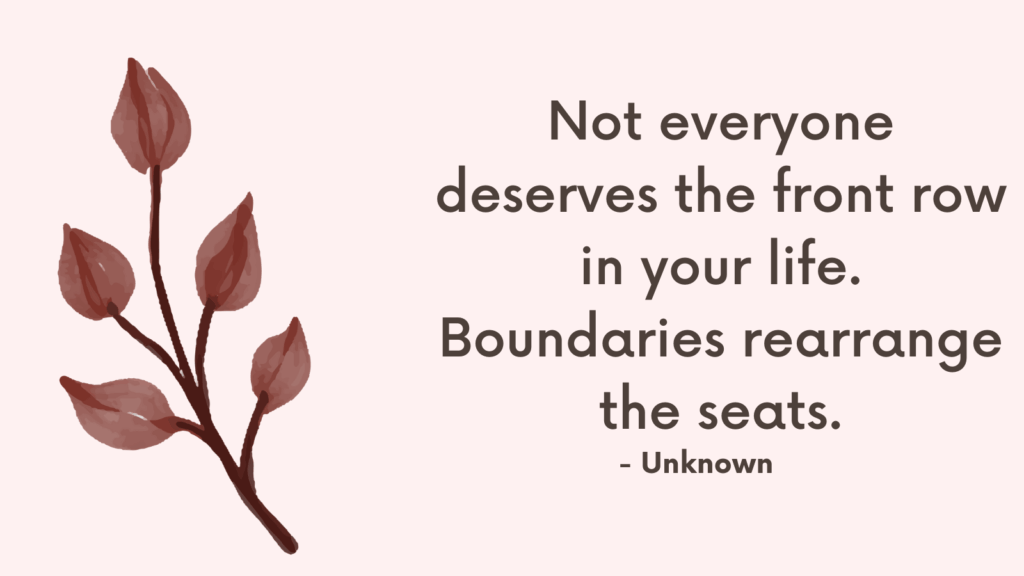
You can be firm and kind. Boundaries are not cruelty—they are clarity.
6. Shift the Conversation to Non-Body Topics
People often default to body talk without realizing it. Redirecting the conversation can be a powerful boundary in action.
Try shifting with questions like:
- “Have you read anything good lately?”
- “How’s work going for you?”
- “What’s been bringing you joy this week?”
Changing the subject without defensiveness teaches others how to connect with you beyond appearance.
Related: Top 5 Body Dysmorphia Exercises (Cognitive Behavioral Therapy For BDD)
7. Recognize When It’s About Their Own Body Image
Most people comment on others because of their own insecurity, conditioning, or internalized body rules.
Remind yourself:
- “Their words are not about me.”
- “They’ve been shaped by a culture that judges bodies.”
- “I don’t have to internalize their lens.”
This perspective makes room for compassion without self-abandonment.
8. Speak Up If You Witness Body Talk About Others
Body comments don’t just harm you—they harm everyone in earshot.
Try saying:
- “Can we not talk about people’s bodies?”
- “Let’s keep this space body-neutral.”
- “I’m trying to unlearn commenting on looks—I’d love it if we all did.”
Shifting the group culture helps create safer, more respectful environments.
9. Do a Self Check-In Afterward
Even with great boundaries, body comments can linger. Don’t ignore the emotional aftermath.
Try journaling or asking yourself:
- “What emotion did that comment trigger?”
- “What old belief did it activate?”
- “What does my body need to feel safe right now?”
Tending to yourself after a comment is just as important as setting the boundary.
10. Build a No-Body-Comment Culture With Trusted People
Normalize non-appearance-based compliments and affirmations. With your close circle, you can co-create space where body talk isn’t the default.
Try:
- Complimenting others on their energy, humor, or wisdom
- Asking for support: “Can we make this a no-body-talk friendship?”
The more body-neutral language you model, the more others follow.
Related: Best 9 Body-Focused Repetitive Behaviors (BFRBs) Books

Conclusion
Your body is not public property.
It is not up for review, feedback, or evaluation.
And you never owe anyone access to your self-image.
The more you protect your peace, the more space you create for real connection—based not on how you look, but on who you are.
And that’s where your worth lives.