When life feels dominated by pain, trauma, or limiting beliefs, it can start to feel like your story has already been written — that you’re trapped in one unchanging narrative of failure, loss, or struggle. Narrative therapy offers a different view: you are not your problems, and your story is still unfolding. It invites you to step outside the old scripts and begin re-authoring your life from a place of awareness, strength, and meaning.
What Narrative Therapy Really Means
Narrative therapy is based on the idea that we understand our lives through the stories we tell about them. These stories shape our identity—what we believe about ourselves, our worth, and our possibilities. But when those stories are filled with pain, failure, or shame, we start to see ourselves only through that narrow lens. Narrative therapy helps you step back and realize: you are not your story—you are the storyteller.
How Stories Become Self
The mind doesn’t just record events—it gives them meaning. Over time, those meanings solidify into self-beliefs: I’m not enough, I always mess things up, people always leave. These phrases become invisible scripts running in the background of your life. Narrative therapy helps you uncover those scripts, question them, and see where they came from—often from past wounds, cultural expectations, or other people’s voices mistaken for your own.
Related: CBT Worksheets Bundle (FREE PFD Download)
How Can Narrative Therapy Help You Re-Author Your Life?
1. It Separates You From the Problem
In narrative therapy, you are not seen as the problem — the problem is the problem. By externalizing it, you create emotional distance: instead of saying “I am anxious,” you might say, “Anxiety is visiting me again.” This small shift changes everything. It allows you to see your issue as something that influences your life, not something that defines who you are.
2. It Helps You See the Dominant Story
Every person lives with a “dominant story” — the main narrative that shapes how they see themselves. For some, it’s “I always mess things up” or “I’m not lovable.” Narrative therapy helps uncover these repetitive patterns and the moments that gave rise to them. Seeing the story clearly is the first step toward rewriting it.
3. It Uncovers the Hidden Stories of Strength
Alongside every painful story, there are smaller, quieter stories — moments when you were resilient, kind, or capable. Narrative therapy helps you rediscover these forgotten truths. By collecting these “alternative stories,” you begin to build a fuller, more balanced view of yourself — one that includes both struggle and strength.
Related: Best 40 Therapeutic Journal Prompts
4. It Challenges Limiting Beliefs
Many life stories are shaped by societal, cultural, or family expectations — who you “should” be, how you “should” behave. Narrative therapy invites you to question where these beliefs come from and whether they truly serve your values. This awareness gives you permission to step outside roles that no longer fit and to redefine your identity on your own terms.
5. It Gives Meaning to Your Experiences
Re-authoring your story doesn’t erase pain — it reframes it. Instead of viewing hardship as proof of failure, you start to see it as evidence of endurance, growth, and transformation. This meaning-making process restores purpose where hopelessness once lived.
6. It Encourages Collaboration, Not Judgment
In narrative therapy, the therapist is not the “expert” who fixes you. They’re a collaborator who helps you explore your own wisdom, memories, and language. This relationship empowers you to become the storyteller of your life rather than a passive character in someone else’s version.
Related: Best 10 CBT Therapy Books
7. It Helps You Use Language to Heal
Words shape reality. When you begin to use new language — replacing “I’m broken” with “I’m healing” or “I’m learning to cope” — your internal narrative shifts. You start seeing yourself through a gentler, more hopeful lens, which gradually changes your emotional landscape.
8. It Reconnects You With Agency
Trauma, oppression, and prolonged stress can strip away your sense of control. Narrative therapy reminds you that even when you couldn’t choose what happened to you, you can still choose what it means and how the story continues. That sense of authorship restores power to where pain once ruled.
9. It Encourages Future-Focused Storytelling
You’re not limited to retelling the past — you can imagine and script the future. Narrative therapy helps you envision what a preferred story might look like: “What kind of person do I want to become?” “What values do I want my story to reflect?” This vision becomes the compass for your next chapter.
10. It Restores Hope Through Story Integration
Healing doesn’t mean deleting the painful chapters — it means integrating them. Narrative therapy helps you weave past pain into your broader life story in a way that adds depth, not damage. Over time, the story changes from “I’m broken” to “I’ve survived, and I’m still writing.”
Related: Best 25 CBT Journal Prompts
10 Narrative Therapy Exercises
1. Name the Problem
Write down the issue you’re struggling with and give it a name that separates it from you — like “The Inner Critic,” “Fear Voice,” or “Perfectionism Monster.” Describe how it affects your life, how it speaks to you, and how you respond to it. Naming it helps you see the problem as an influence, not your identity.
2. Map the Influence of the Problem
Draw two columns: one titled How the Problem Affects Me and the other How I Respond to It.
In the first, list the ways the problem impacts your emotions, relationships, or behavior. In the second, note the times you resisted or lessened its power. Seeing these patterns reminds you that you already have moments of strength.
3. Identify Exceptions to the Problem Story
Think of times when the problem didn’t have full control — even briefly. Maybe you felt calm during a situation that usually triggers anxiety, or you spoke up when self-doubt told you to stay quiet. Write down what made those moments possible. These exceptions are clues to your resilience and resources.
4. Write the “Old Story” and the “New Story”
In one paragraph, describe the old story — the version of your life the problem has been telling: “I’m not enough,” “I always fail,” or “People always leave.” Then, write the new story that feels truer or more empowering: “I’m learning,” “I’ve overcome difficult things before,” or “I’m capable of meaningful connection.”
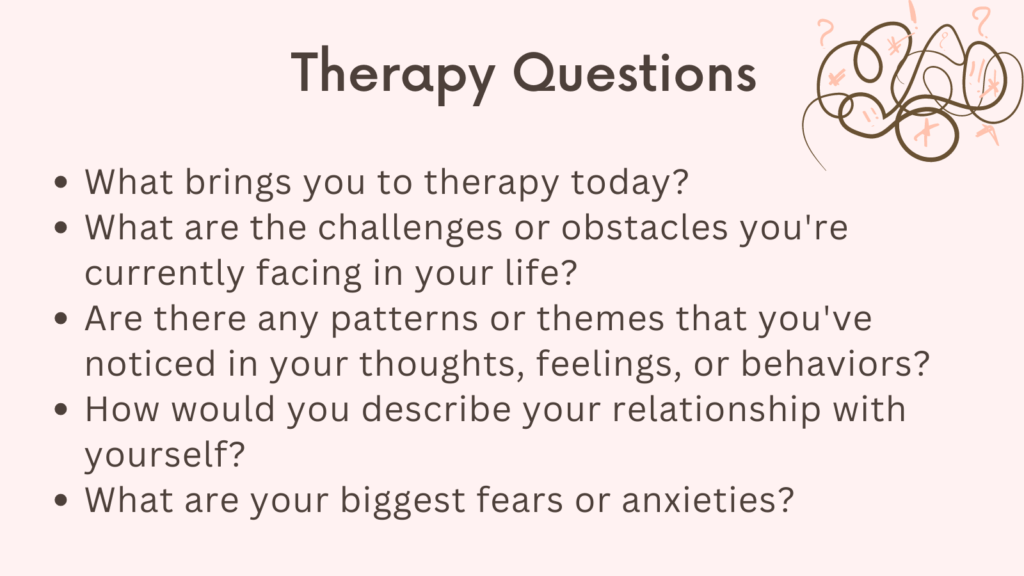
Related: Top 100 Therapy Questions
5. Create a Letter to the Problem
Write a letter directly to the problem, expressing how it’s affected your life and what boundaries you now set. You might say, “Anxiety, you’ve been trying to protect me, but your methods hurt me. I’m ready to take back control.” This exercise helps externalize and reclaim power.
6. Collect “Evidence” of Strength
Keep a notebook of small examples of courage, kindness, or progress. Each entry can be one line: “I reached out for help today,” or “I got through something uncomfortable.” Over time, this collection becomes your counter-narrative — proof that you are more than your struggles.
7. Revisit Pivotal Moments From a New Lens
Think of a defining moment in your life and write about it again — this time focusing on what you learned, what strengths emerged, or who supported you. Rewriting old memories with compassion helps transform wounds into wisdom.
8. Create a “Values Map”
List five core values that matter most to you — like honesty, love, growth, or justice. For each, write one way you’ve lived that value despite difficulty. Values ground your story in meaning, reminding you that your life is guided by purpose, not pain.
Related: What to Do If You Feel Worse After a Therapy Session?
9. Invite Witnesses to Your New Story
Share your evolving story with a trusted person — a friend, therapist, or support group. Hearing your narrative spoken aloud helps it feel real. Let others reflect what they see in you that you might overlook. Sometimes others hold parts of our story we’ve forgotten.
10. Write a “Future Chapter”
Imagine your life one year from now if your preferred story were fully alive. Write it in the present tense: where you are, how you feel, what’s changed. Describe not just what’s different but what stayed true — your values, your lessons, your resilience. This creates a sense of direction and possibility.
Related: How to Make the Most of Just 1 Hour of Therapy a Week?
Conclusion
Narrative therapy teaches that you are both the narrator and the author of your life. You can choose what meaning to give your experiences, what stories to keep, and which ones to rewrite. By separating yourself from the problem, rediscovering your strengths, and creating new language for your truth, you reclaim authorship of your own existence. Healing begins not with erasing your past — but with picking up the pen and continuing the story with intention, compassion, and hope.