When self-worth becomes entangled with appearance, confidence rises and falls based on reflection, comparison, or approval. This creates a fragile sense of value that is constantly at risk of collapse. Separating self-worth from appearance is not about ignoring your body or rejecting care. It is about freeing your sense of identity from constant visual evaluation so that your value becomes stable, internal, and emotionally grounded.
How Appearance Becomes a Stand-In for Worth
This connection usually forms quietly through repeated messaging:
Being praised more for looks than for character
Learning that beauty brings approval and safety
Watching bodies ranked, compared, and rewarded
Internalizing that being seen equals being valued
Absorbing the idea that desirability equals importance
Over time, the brain learns to use appearance as shorthand for belonging.
Why Appearance Feels Easier to Control Than Worth
Appearance is tangible. It can be adjusted, tracked, and managed. Worth is internal, relational, and harder to stabilize when it was never modeled as unconditional. Many people try to manage insecurity through the body because it feels like something they can actually influence.
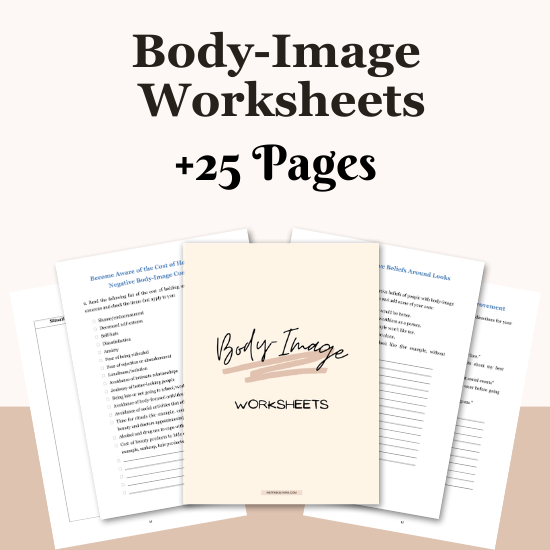
Related: Struggling with Body Image? These Worksheets Support Healing and Self-Acceptance
How to Separate Self-Worth From Appearance?
1. Notice How Often You Measure Your Value Visually
Pay attention to how frequently mirrors, photos, or reflections affect your mood. This awareness helps you see how deeply appearance has been tied to worth. Recognition is the first step toward separation.
2. Observe When Your Confidence Changes With Your Look
Track whether your self-esteem rises on days you feel attractive and drops on days you do not. This emotional pattern reveals how conditional your self-worth has become.
3. Name the Cultural Rules You Internalized
Write down the standards you were taught about beauty, attractiveness, and acceptability. Many of these beliefs were absorbed unconsciously. Naming them weakens their authority over your identity.
4. Stop Using Appearance as Emotional Proof
When you feel unworthy, notice if you search for visual flaws to justify the feeling. Emotional pain does not need physical evidence. This habit keeps shame anchored to the body.
5. Shift Focus From How You Look to How You Live
Redirect attention toward how you show up in your values, relationships, work, and daily choices. Character-based identity builds internal worth that does not depend on visual feedback.
Related: Positive Body Image Quiz
6. Let Neutrality Replace Constant Evaluation
You do not need to admire your appearance to detach your worth from it. Simply reducing constant positive or negative evaluation creates psychological freedom.
7. Notice When Praise About Looks Feels Like Oxygen
If appearance-based compliments feel necessary for emotional stability, worth has attached to external validation. This awareness helps you seek sturdier sources of affirmation.
8. Build Identity in Areas Unrelated to Appearance
Invest time and meaning into skills, ideas, service, creativity, learning, and connection. The more layered your identity becomes, the weaker appearance-based worth becomes.
9. Stop Interpreting Aging or Change as Decline
Bodies naturally change through life. When change is labeled as loss of value, worth becomes unstable. Reframing change as transition protects emotional stability.
10. Separate Attention From Value
Being noticed does not equal being valuable, and being unseen does not equal being unworthy. When worth depends on visibility, self-esteem becomes performative.
11. Watch for Shame-Based Motivation
If your drive to improve your appearance is fueled by fear, pressure, or rejection, worth is still entangled with looks. Motivation rooted in shame never creates security.
Related: Top 21 Body Image Journal Prompts (+FREE Worksheets)
12. Allow Your Body to Exist Without Representing You
Your body does not have to communicate success, discipline, or desirability. Let it simply be a lived-in vessel rather than a public statement of value.
13. Notice When You Delay Life Until You Look Better
Postponing joy, connection, or confidence until appearance changes keeps worth trapped in the future. This creates chronic dissatisfaction with the present self.
14. Detach Your Lovability From Symmetry and Size
Lovability is a relational and emotional experience, not a physical measurement. When love feels conditional on looks, emotional safety erodes.
15. Let Self-Respect Lead Before Self-Approval
You do not need to like how you look to treat yourself with dignity. Respect creates behavioral stability even when feelings fluctuate.
16. Observe How Media Shapes Your Self-Perception
Constant exposure to idealized images distorts emotional reality. Awareness protects you from confusing stylized fiction with human normalcy.
17. Stop Using Appearance as a Moral Scorecard
Bodies are not evidence of worth, effort, or character. When appearance becomes a moral measure, shame becomes inevitable.
Related: Top 5 Body Dysmorphia Exercises (Cognitive Behavioral Therapy For BDD)
Conclusion
Separating self-worth from appearance is a psychological and emotional uncoupling process. As you shift your identity away from constant visual evaluation and toward values, character, and inner stability, your worth stops fluctuating with reflection and comparison. When appearance becomes just one small part of who you are rather than the foundation of who you are, self-esteem finally gains solid ground.