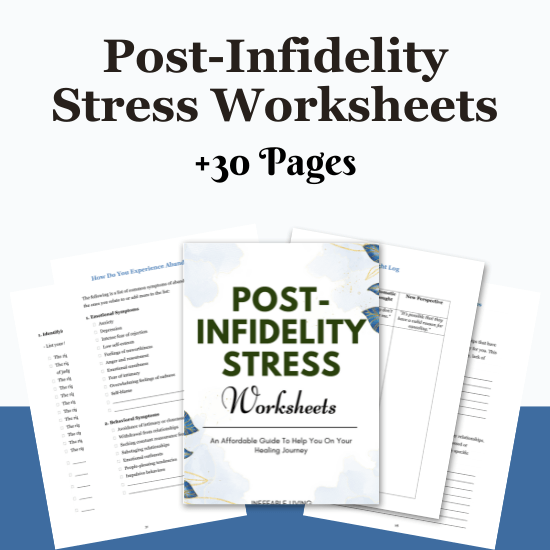
Find helpful resources for coping with and recovering from infidelity, including a quiz, books, blog posts, podcasts, and TED or TEDx Talks.
Table of Contents
Quiz
Books


Blog Posts
- How To Get Past Infidelity Triggers? Top 8 Tips (+FREE Worksheets)
- How to Talk About Marriage Infidelity?
- How to Heal From Infidelity Trauma?
- 8 Stages of Forgiving Infidelity
- What to Do As a Therapist When You Suspect Infedility In Couples therapy?
- The Psychology Behind Cheating And Lying
- How to Move Forward After Being Cheated On?
- How to Decide Whether to Stay or Leave After Being Cheated On?
- How to Rebuild Your Self Worth After Being Cheated On?
- What Makes Someone Cheat Even If They’re Happy?
Infidelity Recovery Podcasts
- The Affair Recovery Podcast
Click here
A currently active weekly podcast focused specifically on recovering from infidelity. Therapists discuss betrayal trauma, intrusive thoughts, anger, boundaries, rebuilding trust, disclosure, forgiveness, intimacy, children, and deciding whether a marriage can be repaired. - Helping Couples Heal Podcast
Click here
One of the more established podcasts devoted to betrayal and relational trauma. Episodes explain why betrayed partners repeatedly revisit what happened, what rebuilding trust requires, how the betraying partner can respond more effectively, and what genuine relationship repair looks like. - Heal From Infidelity — Andrea Giles
Click here
Focuses on rebuilding self-trust after betrayal rather than making recovery depend entirely on what the unfaithful partner does. Topics include difficult decisions, resentment, boundaries, shame, fear, rebuilding confidence, and creating a meaningful life whether the relationship survives or ends. - Where Should We Begin? With Esther Perel
Click here
One of the most popular relationship podcasts. Psychotherapist Esther Perel works with real couples dealing with affairs, secrecy, broken trust, resentment, intimacy problems, and major relationship decisions. - Choosing to Stay After Infidelity and Betrayal
Click here
A current weekly podcast for couples deciding to rebuild after betrayal. It focuses on accountability, boundaries, trust repair, communication, recurring arguments, difficult emotions, and staying in the relationship without losing yourself. - Betrayal Trauma Recovery
Click here
A long-running podcast focused on the betrayed partner’s experience. Episodes address lying, manipulation, emotional safety, boundaries, infidelity, trust, and recognizing when a relationship continues to be harmful rather than genuinely changing.
- Why People Cheat—and Can Relationships Recover? — Speaking of Psychology
Click here
A 2026 American Psychological Association episode with relationship researcher Dr. Galena Rhoades. It examines why people cheat, how infidelity affects trust and identity, what makes some betrayals harder to recover from, and how psychologists help individuals and couples decide what happens next.
TED & TEDx Talks About Infidelity Recovery
- Rethinking Infidelity: A Talk for Anyone Who Has Ever Loved — Esther Perel
Click here
The most widely watched TED talk specifically about infidelity, with more than 25 million plays. Esther Perel explains why affairs can cause such a deep emotional shock, why people cheat even in relationships they value, and how couples may approach the question of whether to rebuild. - Infidelity: To Stay or Go…? — Lucy Beresford
Click here
Psychotherapist Lucy Beresford focuses specifically on the decision to stay after an affair. She discusses what the person who cheated must do if trust is going to be rebuilt and why staying should involve real changes rather than simply returning to how the relationship was before. - The Other Side of Infidelity — Dr. Kevin Skinner
Click here
Focuses on the experience of the betrayed partner and why discovering sexual betrayal can have such a strong psychological impact. It highlights the need to take the betrayed person’s reactions seriously rather than treating the affair as simply another relationship disagreement. - How to Build and Rebuild Trust — Frances Frei
Click here
Harvard professor Frances Frei breaks trust into clear components and explains what has to change when trust has been damaged. Although it is not limited to infidelity, its framework is useful for judging whether trust is actually being rebuilt through consistent behavior rather than promises.