When a relationship ends, it may look like one event caused the breakup—a fight, an affair, or a painful argument. But most of the time, endings are not about a single moment. They’re the result of small fractures that built up over time until the bond could no longer hold. Understanding this helps shift the story from blame toward clarity.
Why Relationships Rarely End Because of Just One Thing
1. Small Patterns Accumulate Over Time
It’s rarely the one big fight—it’s the repeated cycle of not feeling heard, respected, or cared for. A single harsh word may sting, but years of dismissiveness or neglect erode trust in ways that one apology can’t fix.
2. Unmet Needs Create Silent Distance
When emotional needs—like safety, affection, or validation—go unmet, people start to withdraw. At first, it might feel like little things: shorter conversations, less laughter, fewer check-ins. But slowly, distance replaces closeness.
3. Resentment Grows in the Gaps
Every unresolved hurt becomes a brick in the wall between partners. Even if it’s unspoken, the weight of unaddressed resentment eventually crushes connection. By the time the final conflict happens, the wall is already high.
4. Change Happens at Different Speeds
Relationships struggle when one person grows and the other resists. Even without betrayal or cruelty, mismatched growth can leave partners feeling like strangers to each other. The ending isn’t about one thing—it’s about a gap that kept widening.
5. Communication Breakdowns Compound
A single miscommunication can be repaired. But when every attempt to talk turns into defensiveness, avoidance, or conflict, repair stops happening. Over time, the silence becomes louder than the words.
6. The “Final Straw” Is Usually Symbolic
When people say, “It ended because of that one fight,” it’s often shorthand. That moment was simply the breaking point—the place where all the hidden pain finally overflowed. The real cause was the buildup beneath it.
7. Endings Reflect Layers of History
Every relationship carries not just two people, but their histories—childhood wounds, family patterns, past relationships. The layers of stress, misunderstanding, and unmet healing can intertwine until they weigh too much for the partnership to hold.
Related: Breakup Therapy: 6 Techniques to Help Clients Cope With Grief
Why We Miss the Warning Signs
People stay for many reasons — love, history, fear, hope.
And because of that, they often minimize problems:
- “It’s not that big of a deal.”
- “They didn’t mean it.”
- “Maybe I’m too sensitive.”
- “It’ll get better.”
Over time, this self-silencing makes it harder to recognize when needs are going unmet — until the emotional gap becomes too wide to bridge.
How to Heal After a Relationship Ends?
1. Allow Yourself to Grieve
A breakup is a kind of death—the death of shared dreams, routines, and the future you imagined. Suppressing grief only delays healing. Give yourself permission to feel the sadness, anger, or emptiness. Tell yourself: “This hurts because it mattered.” Grieving honors what was real.
Related: Navigating Separation: How to Care for Your Heart and Move Forward with Strength
2. Accept That Healing Is Nonlinear
Some days you’ll feel okay, and others the grief will hit like a wave. Healing doesn’t follow a straight timeline. Instead of asking, “Why am I not over this yet?” remind yourself: “Healing takes time, and setbacks are part of progress.”
3. Reconnect With Yourself Outside the Relationship
Breakups often leave you asking, “Who am I without them?” Rebuilding means rediscovering your own identity. Ask yourself:
- “What did I set aside for this relationship?”
- “What hobbies, dreams, or friendships can I return to?”
- “What new things do I want to try now?”
Reconnecting with yourself restores what the relationship once overshadowed.
4. Create Boundaries With Your Ex
Contact with an ex can reopen wounds. Healing is easier with boundaries, whether that means limiting communication, unfollowing on social media, or creating distance until emotions settle. Boundaries aren’t punishment—they’re protection for your recovery.
5. Challenge the Stories That Keep You Stuck
After a breakup, your mind may replay self-blaming thoughts: “I wasn’t enough,” “I’ll never find love again,” “I ruined everything.” These are grief-fueled distortions, not truths. Write them down, then ask: “Is this fact—or is it pain talking?” Reframing helps loosen their grip.
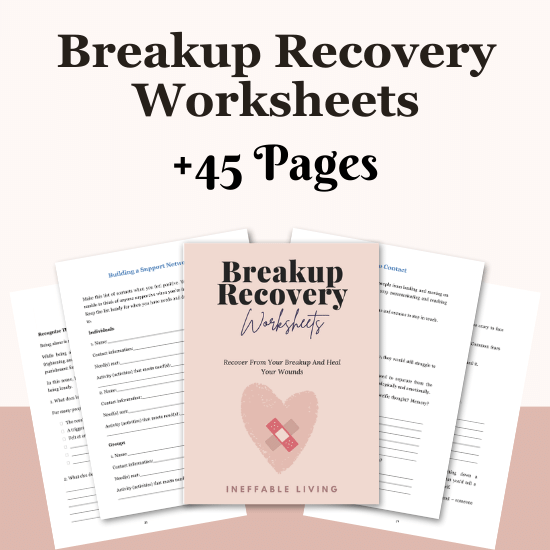
Related: Top 45 Breakup Journal Prompts (FREE Breakup Worksheets)
6. Lean on Supportive Connections
Breakups often feel isolating, but healing grows in community. Talk with trusted friends, family, or a therapist who can remind you of your worth. Being witnessed in your pain makes the load lighter.
7. Take Care of Your Body as You Heal Your Heart
Grief can disrupt sleep, appetite, and energy. Even small acts of self-care—drinking water, eating nourishing food, moving your body, or resting—signal to yourself: “I deserve care even in pain.” Physical care strengthens emotional recovery.
8. Find Meaning in the Ending
Healing deepens when you reflect on what the relationship taught you. Ask:
- “What did I learn about myself?”
- “What patterns do I want to change?”
- “How can I carry the lessons without carrying the pain?”
Meaning turns heartbreak into growth, helping you step forward with more clarity.
Related: Top 7 Tips On Setting Boundaries With An Ex When In A New Relationship
Conclusion
Relationships rarely end because of a single event. Most endings are the result of repeated patterns, unmet needs, and accumulated distance that slowly unravel connection. The “one thing” that ends it is usually just the spark that ignites years of hidden kindling. Understanding this helps us see endings not as sudden failures, but as the natural outcome of wounds that were never repaired.