This post contains some of the best journal prompts for boundaries to help you become more assertive.
What Are Journal Prompts?
A journal prompt is a phrase, an idea, or a question that serves as a focal point to connect with yourself.
Free-write journaling can be overwhelming when you don’t know where to begin. Journaling prompts help to provide a starting point for writing.
What Are Healthy Boundaries?
Many people mistakenly believe that setting boundaries is about cutting people off.
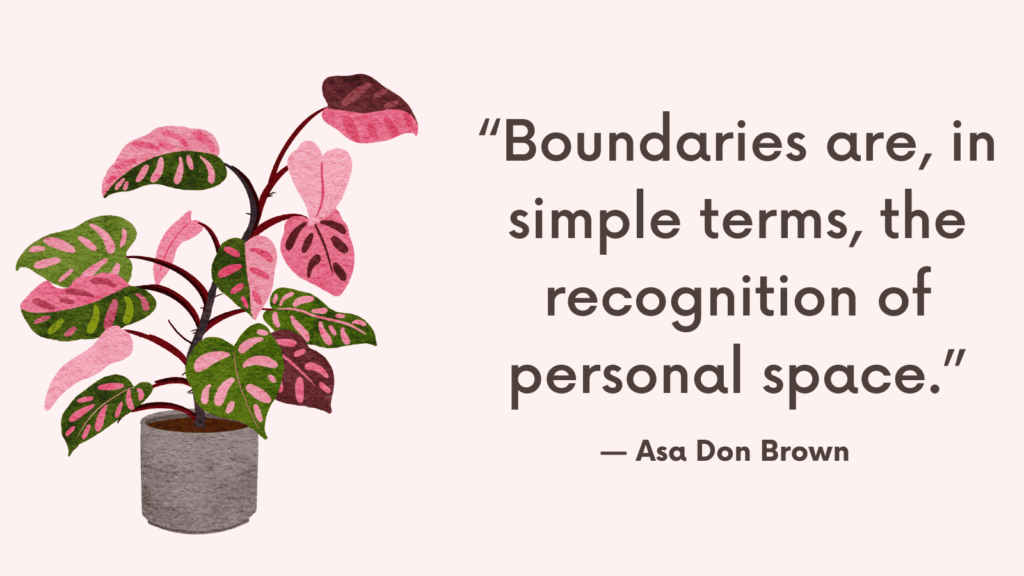
Emotional boundaries are perimeters that we establish with ourselves and others.
They’re about communicating to others what treatment we will or will not tolerate. But they’re also about taking responsibility for your own life.
Boundaries help us feel safe in our relationships.
Are you suffering from unhealthy boundaries? The following are common signs your boundaries may be unhealthy.
- Feeling overwhelmed
- Feelings resentful
- Burnout
- Neglecting self-care
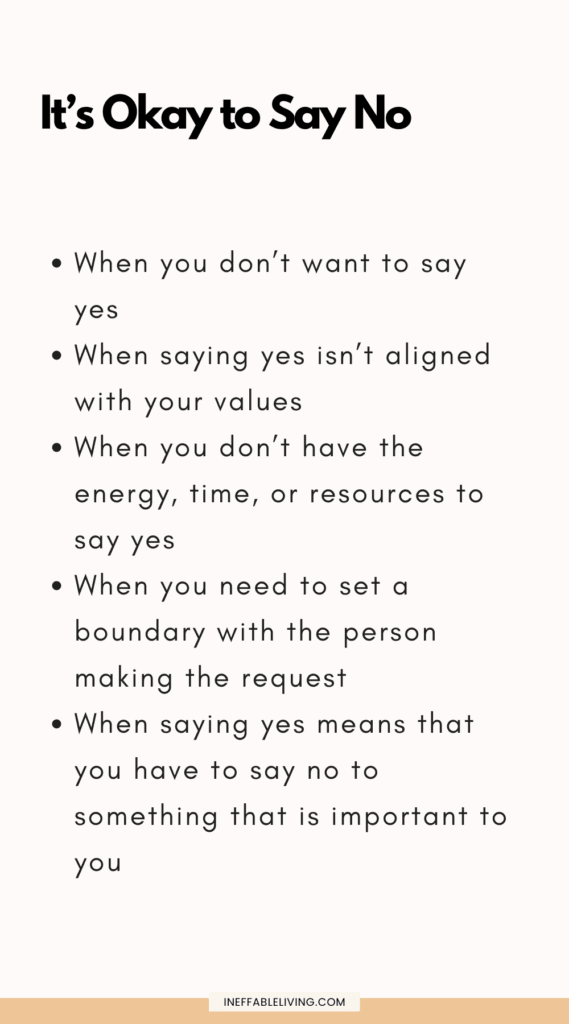
- Struggling to say no
- Struggling to ask for help
- Rescuing others
Related: Top 25 Tips On How To Set Boundaries In A Toxic Relationship? (+FREE Worksheets PDF)
Journal Prompts For Boundaries
- What does the word boundaries mean to you right now?
- Where in your life do boundaries feel weakest?
- Where do they feel strongest?
- What happens when you try to set a boundary?
- What fears come up when you think about saying no?
- Who do you struggle most to set boundaries with?
- Who feels safest to set boundaries with?
- What do you usually say yes to out of guilt?
- What do you say yes to out of fear?
- What do you say yes to out of habit?
- What signs tell you a boundary is being crossed?
- How does your body react when a boundary is violated?
- What emotions show up after you overextend yourself?
- What do you resent but rarely name?
- What do you tolerate that drains you?
- What do you wish people would stop asking of you?
- What do you wish you gave yourself permission to refuse?
- What do you owe yourself more than others?
- What feels harder, disappointing others or disappointing yourself?
- Why do you think that is?
- What messages did you learn about boundaries growing up?
- Were boundaries respected in your family?
- Were you punished for having needs?
- Were you expected to manage others’ emotions?
- How do those early lessons still affect you?
- What boundary patterns keep repeating in your life?
- What roles do you fall into that blur boundaries?
- What does people-pleasing protect you from?
- What does it cost you?
- What would change if you stopped explaining yourself so much?
- What boundaries do you have around your time?
- What boundaries do you need around your energy?
- What boundaries do you need around your emotions?
- What boundaries do you need around your work?
- What boundaries do you need around your family?
- What boundaries do you need around friends?
- What boundaries do you need around romantic relationships?
- What boundaries do you need around communication?
- What boundaries do you need around availability?
- What boundaries do you need around privacy?
- What do you fear would happen if you enforced a boundary consistently?
- What has actually happened in the past when you did?
- Who benefited when you had no boundaries?
- Who benefits when you do have boundaries?
- What reactions from others are hardest for you to tolerate?
- What reactions are you trying to prevent?
- What does standing your ground bring up in you?
- What guilt is not actually yours to carry?
- What responsibility do you take on that is not yours?
- What responsibility do you avoid that actually is yours?
- What does a healthy boundary sound like in words?
- What does a healthy boundary look like in behavior?
- How do you usually communicate boundaries now?
- How clear are you when you state your limits?
- How often do you backtrack after setting a boundary?
- Why do you think you do that?
- What would help you stay firm?
- What support would make boundary-setting easier?
- What examples of strong boundaries have you seen modeled well?
- What can you learn from them?
- What boundary do you keep promising yourself you’ll set?
- What keeps delaying it?
- What would happen if you set it this month?
- What would happen if you didn’t?
- What discomfort are you avoiding by not setting it?
- What long-term discomfort are you creating instead?
- What does self-respect look like in this situation?
- What does self-betrayal look like here?
- How do you know when you’ve crossed your own boundary?
- What do you usually do after that happens?
- What would it mean to trust yourself to hold boundaries?
- What proof do you already have that you can?
- What boundary feels scary but necessary?
- What boundary feels overdue?
- What boundary would give you immediate relief?
- What boundary would improve your relationships long-term?
- What boundary would improve your mental health most?
- What boundary would protect your energy daily?
- What boundary would help you feel safer?
- What boundary would help you feel more free?
- What do you want people to learn about how to treat you?
- What behavior are you no longer willing to accept?
- What are you done explaining or justifying?
- What does honoring your limits say about you?
- What does ignoring them say about you?
- What would change if your needs mattered as much as others’?
- What does balanced give-and-take look like to you?
- What relationship needs clearer boundaries right now?
- What boundary conversation are you avoiding?
- What is one sentence you could practice saying?
- What small boundary could you practice this week?
- What would success look like with that boundary?
- What feelings might come up afterward?
- How can you support yourself through those feelings?
- What does progress with boundaries actually look like?
- What does perfectionism around boundaries cost you?
- What permission do you need to give yourself today?
- What boundary honors who you are becoming?
- What kind of life do strong boundaries make possible for you?
- What is one boundary you are ready to take seriously now?
Related: Top 35 Boundaries Affirmations To Help You Become More Assertive
People-pleasing Worksheets
Benefits of Using Journal Prompts for Boundaries?
Using journal prompts for boundaries can be a powerful tool for personal growth and development.
Here are some benefits of using journal prompts for boundaries:
1. Increased Self-Awareness: Journal prompts help you become more aware of your thoughts, feelings, values, and beliefs. This self-awareness is essential for setting healthy boundaries and recognizing when they’ve been crossed.
2. Clarity: Writing down your thoughts and feelings can help bring clarity to situations. When you write about your boundaries, it becomes easier to understand what they are and why they’re important to you.
3. Improved Communication: Journaling about boundaries can improve your communication skills. By exploring your thoughts and feelings, you’ll be better equipped to express yourself effectively when someone crosses your boundaries.
4. Greater Self-Respect: Setting and maintaining healthy boundaries is a sign of self-respect. Journal prompts can help you explore how you want to be treated and what you need to feel valued and respected.
5. Enhanced Problem-Solving Skills: Journaling about boundaries can help you identify patterns and problems in your relationships. This increased awareness can lead to improved problem-solving skills as you work to create healthier boundaries.
Related: Top 10 Tips For Setting Boundaries With Narcissistic Parents
How to Use Journal Prompts for Boundaries?
Here are some steps to help you get started:
1. Start by identifying your boundaries: Take a few minutes to reflect on what behaviors, situations, or interactions make you feel uncomfortable or violated.
2. Choose the appropriate prompts: There are numerous prompts available online, but the ones that work best for you will depend on your goals and intentions.
3. Set aside time to write: Schedule some quiet time in your day to write down your thoughts and reflections on the prompts. Try to be as honest and authentic as possible.
4. Review and evaluate your responses: After writing, take some time to read over your responses and evaluate them. Are there any patterns or themes that emerge? Do you notice any inconsistencies between what you say you want and what you actually do? Use this information to adjust and refine your boundaries.
5. Take action: Finally, use your insights and reflections to take action and assert your boundaries. Communicate your needs and expectations clearly and consistently, and be prepared to set consequences if necessary.
Related: How To Set Boundaries With A Narcissist?
Conclusion
Using journal prompts for setting, maintaining, and reinforcing boundaries can be an effective tool.
Remember, boundaries are essential for your emotional, mental, and physical well-being, and it’s okay to prioritize your own needs and desires.