This post contains some of the best self-reflection journal prompts.
What Are Journal Prompts?
Journal prompts are a set of thought-provoking questions, statements, or ideas that are designed to inspire and guide individuals in their personal writing.
These prompts can vary in length, complexity, and subject matter, but they all serve the same purpose: to encourage reflection, creativity, and self-expression.
Journal prompts can be used to kickstart a writing session, explore a new topic or idea, express emotions, or simply document one’s thoughts and experiences.
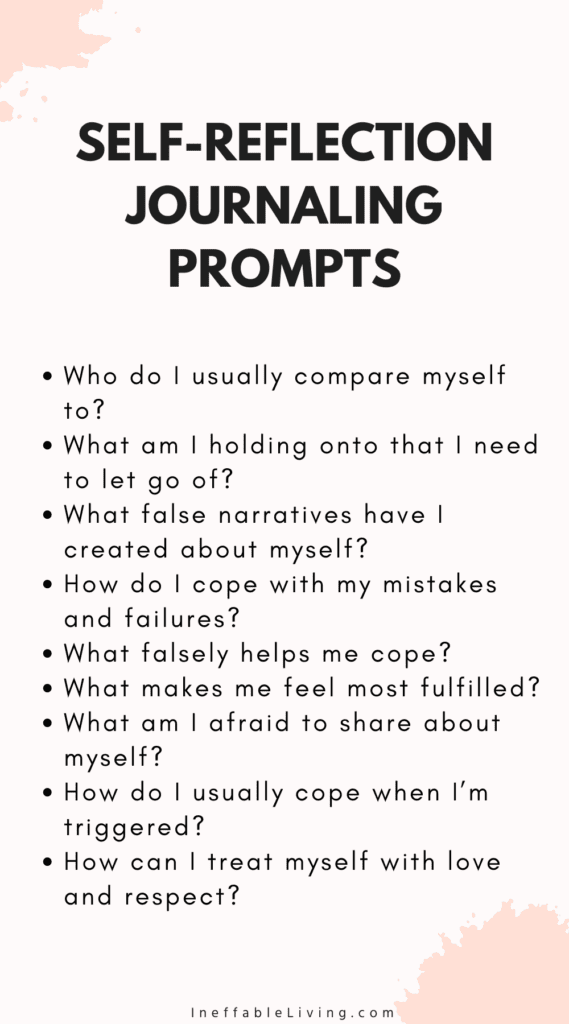
Self Reflection Journal Prompts
- What has been on your mind the most lately?
- What emotions have been strongest this week?
- What are you currently struggling with?
- What are you currently handling better than before?
- What feels heavy in your life right now?
- What feels lighter than it used to?
- What keeps repeating in your thoughts?
- What are you avoiding thinking about?
- What do you distract yourself from most often?
- What do you need more honesty about?
- What choices have you been proud of recently?
- What choices do you question the most?
- What patterns do you notice in your behavior?
- What patterns do you want to change?
- What situations trigger strong reactions in you?
- What usually helps you calm down after those moments?
- What do you do when things feel out of control?
- What do you do when you feel confident?
- What do you do when you feel unsure of yourself?
- What emotions are hardest for you to sit with?
- What emotions are easiest for you to express?
- What needs do you tend to ignore?
- What needs do you prioritize most?
- What do you expect from yourself that may be unrealistic?
- What expectations feel fair and supportive?
- What beliefs about yourself feel limiting?
- Where did those beliefs come from?
- What beliefs help you cope better?
- What thoughts drain your energy?
- What thoughts help you move forward?
- What are you afraid to admit to yourself?
- What truths are you slowly accepting?
- What do you judge yourself for most?
- What would being more fair to yourself look like?
- What do you usually blame yourself for?
- What responsibility is actually yours?
- What responsibility is not yours?
- What situations make you doubt yourself?
- What situations make you trust yourself more?
- What does self-trust mean to you?
- What boundaries do you struggle to keep?
- What boundaries protect you most?
- What do you tolerate that drains you?
- What do you wish you would stop tolerating?
- What relationships feel supportive right now?
- What relationships feel draining?
- What role do you fall into with others?
- What role do you want to step out of?
- What are you afraid would happen if you changed?
- What might actually happen instead?
- What motivates you when things get hard?
- What causes you to lose motivation?
- What do you do when you feel stuck?
- What helps you get unstuck, even slightly?
- What does progress look like for you right now?
- What does rest look like for you?
- What guilt do you carry around rest?
- What would healthier rest allow you to do?
- What are you trying to prove, and to whom?
- What would it mean if you stopped proving yourself?
- What parts of yourself do you hide from others?
- What parts of yourself do you hide from yourself?
- What helps you feel more like yourself?
- What makes you feel disconnected from yourself?
- What do you miss about earlier versions of yourself?
- What have you outgrown?
- What are you still holding onto?
- What are you ready to release?
- What fears influence your decisions most?
- What values matter most to you right now?
- What actions match your values?
- What actions go against them?
- What does integrity mean to you?
- When do you feel most aligned?
- When do you feel most conflicted?
- What lessons keep showing up in your life?
- What lessons are you resisting?
- What lessons have you already learned the hard way?
- What would trusting the process look like for you?
- What does patience look like in your daily life?
- What are you proud of surviving?
- What are you proud of learning?
- What are you proud of becoming?
- What challenges shaped you the most?
- What strengths do you overlook in yourself?
- What weaknesses are you judging too harshly?
- What does balance mean to you right now?
- What does balance not mean?
- What do you need more of in your life?
- What do you need less of?
- What does a good day look like for you?
- What makes a day feel wasted to you?
- What small changes would improve your days?
- What are you avoiding deciding?
- What would clarity give you right now?
- What does moving forward mean for you at this stage?
- What are you learning about yourself lately?
- What do you want to understand better about yourself?
- What do you want to forgive yourself for?
- What kind of relationship do you want to have with yourself going forward?
Related: Best 18 Self Compassion Journal Prompts (+FREE Worksheets)
FREE Self-Reflection Worksheet PDF
Benefits of Using Self Reflection Journal Prompts
There are several benefits of using self-reflection journal prompts, including:
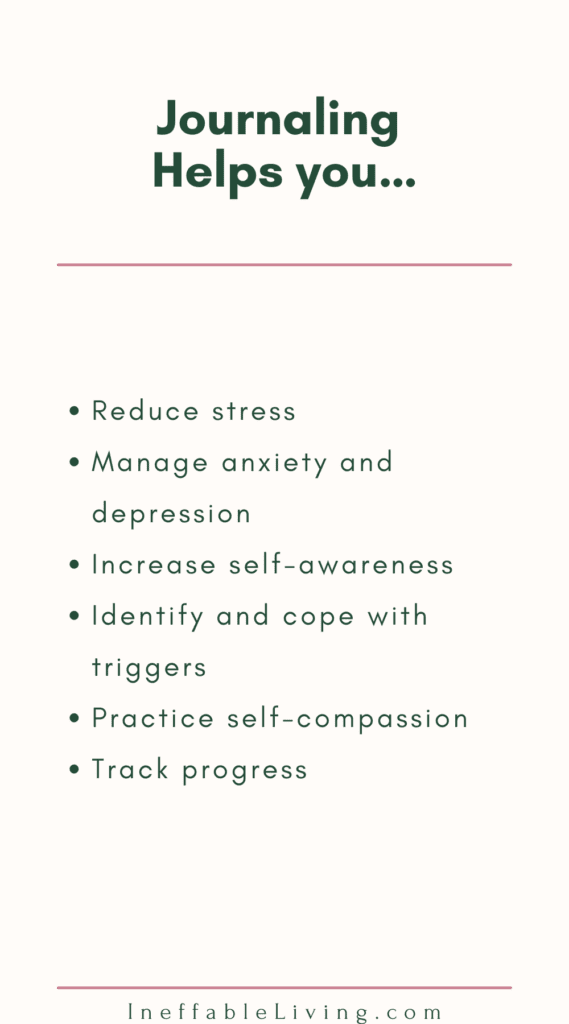
1. Increased self-awareness- Writing down your thoughts and feelings can help you gain a better understanding of yourself and your emotions. By exploring your thoughts and feelings through journaling, you may discover things about yourself that you never knew before.
2. Enhanced clarity- Through self-reflection journaling, you can organize your thoughts and gain greater clarity on your goals, dreams, and aspirations. This can help you focus on what’s most important to you and create an action plan to achieve your goals.
3. Stress relief- Journaling can be a helpful tool to release pent-up emotions and reduce stress. Expressing yourself through writing can help you process difficult emotions and find peace of mind.
4. Improved problem-solving skills- Reflecting on past experiences and brainstorming possible solutions through journaling can help you become more effective at problem-solving. Seeing things from different perspectives can also help you find more creative solutions to challenges.
5. Overall personal growth- By reflecting on your experiences and emotions, you can develop greater insight into yourself and your relationships with others. This can lead to a deeper sense of personal growth and a greater understanding of the world around you.
Related: Top 25 Self-Reflection Journal Prompts
How to Use Self Reflection Journal Prompts?
Using self-reflection journal prompts is a great way to improve your self-awareness and personal growth. Here are some steps to follow:
1. Set aside time: Choose a specific time each day or week to sit down and reflect on your thoughts and experiences. This could be in the morning, before bed, or during your lunch break.
2. Choose a prompt: Select a prompt that resonates with you and your current situation.
3. Write freely: Once you have your prompt, start writing whatever comes to mind. Don’t worry about grammar or structure, just let your thoughts flow.
4. Be honest: Self-reflection requires honesty, so don’t hold back. Take the time to be truthful with yourself and explore your feelings, values, and beliefs.
5. Review and analyze: After you’ve finished writing, take some time to review what you’ve written. Identify any patterns or themes that emerge and analyze how they relate to your life.
6. Take action: Use your reflection to set goals and make changes. Identify areas of your life where you want to improve and take action to make positive changes.
Related: Best 10 Self Discovery Books
Conclusion
Using journaling prompts for self reflection can be a powerful tool for gaining insight and clarity about one’s thoughts, feelings, and experiences.
A journaling prompt is simply a question or statement designed to stimulate introspection and encourage self-reflection.
By taking the time to write down your thoughts in response to these prompts, you can gain a deeper understanding of your own values, beliefs, and motivations.
One of the benefits of using journaling prompts for self reflection is that they allow you to explore your inner landscape without judgment or pressure.
You’re free to write whatever comes to mind without worrying about what others will think or how you’ll be perceived.
This can be incredibly liberating, as it allows you to dig deep and uncover insights that might otherwise have remained hidden.